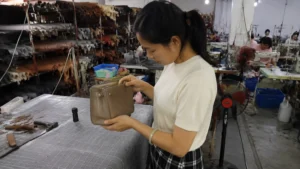
Custom Handbag Manufacturing Process: From Tech Pack to Shipment
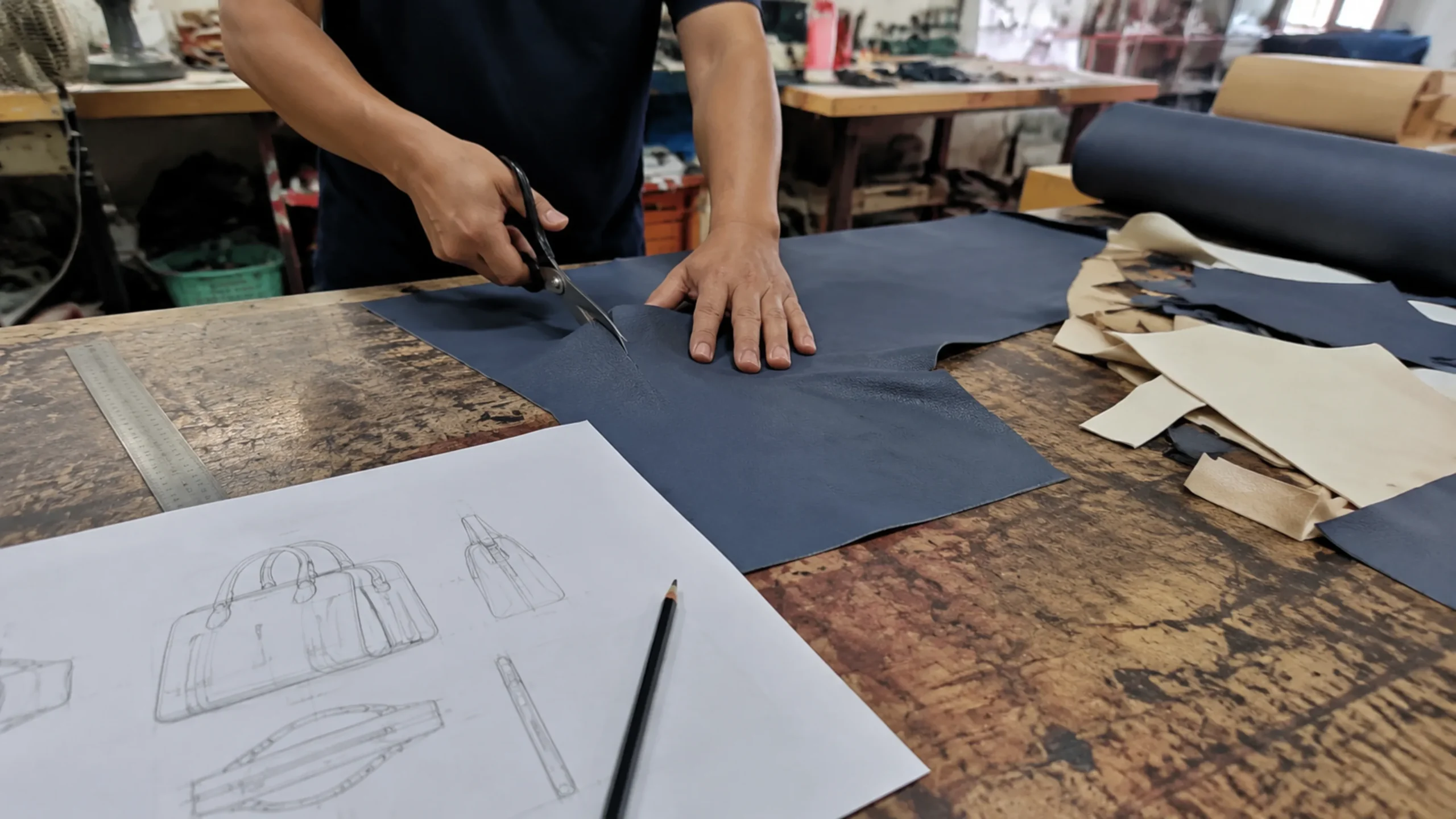
Direct Answer
Custom handbag manufacturing is the process of turning a brand’s design idea, sketch, tech pack, or reference sample into a finished bag that can be produced repeatedly at commercial quality. A complete manufacturing process usually includes design review, material selection, pattern making, sampling, sample revision, pre-production approval, material purchasing, cutting, sewing, hardware assembly, quality control, packing, and shipment.
For brands, the most important part is not only “making a bag.” It is controlling every detail before bulk production starts: size, structure, material, logo, hardware, lining, color, packaging, MOQ, lead time, and inspection standards. When these details are confirmed early, the final product is more consistent, and the risk of delays or quality problems becomes much lower.
At Veggance, we help brands develop custom handbag collections, private label bags, and vegan leather bags from concept to shipment, with support for material sourcing, sampling, OEM/ODM production, quality control, and export-ready packing.
Key Takeaways
- Custom handbag manufacturing starts before the factory cuts any material.
- A clear tech pack or reference sample helps reduce sampling time and production mistakes.
- Sampling is used to confirm structure, material, dimensions, hardware, logo, and workmanship.
- Bulk production should only begin after the final sample, material, color, and packaging are approved.
- Quality control should happen during production, not only before shipment.
- A reliable handbag manufacturer should explain MOQ, sample lead time, production lead time, and possible risks before you pay a deposit.
Table of Contents
- What is custom handbag manufacturing?
- Step 1: Design idea, reference sample, or tech pack
- Step 2: Material and hardware selection
- Step 3: Pattern making and sample development
- Step 4: Sample review and revisions
- Step 5: Pre-production sample approval
- Step 6: Bulk material purchasing
- Step 7: Cutting, sewing, assembly, and finishing
- Step 8: Quality control during production
- Step 9: Packing, labeling, and shipment
- Common mistakes to avoid
- How Veggance supports custom handbag manufacturing
- FAQ
What Is Custom Handbag Manufacturing?
Custom handbag manufacturing means producing bags according to a brand’s design requirements instead of selling only ready-made styles. The factory may follow a complete tech pack, develop a sample from a sketch, adjust a reference design, or help create a new bag collection through OEM or ODM support.
This process is used by fashion brands, private label brands, retail buyers, chain stores, ecommerce sellers, wholesalers, importers, sustainable product teams, and startups launching their first bag line.
Custom handbag manufacturing can include tote bags, crossbody bags, shoulder bags, hobo bags, sling bags, laptop bags, makeup bags, diaper bags, duffle bags, weekender bags, and other bag categories.
For new brands, custom manufacturing gives more control over product identity. For established brands, it helps maintain consistent quality, sizing, material standards, and packaging across repeat orders.
Step 1: Design Idea, Reference Sample, or Tech Pack
Every custom handbag project starts with product information. The clearer the information, the easier it is for the manufacturer to quote, sample, and produce accurately.
A factory can usually start from one of three inputs:
| Starting point | Best for | What the factory needs |
|---|---|---|
| Tech pack | Established brands | Dimensions, materials, hardware, construction, logo, colors, packaging |
| Reference sample | Brands improving an existing style | Physical sample or detailed photos, change instructions, target material |
| Sketch or mood board | New brands or ODM projects | Style direction, target customer, size range, material preference, price range |
A tech pack is the most efficient option because it gives the factory detailed production instructions. But many new brands do not have one yet. In that case, a manufacturer with ODM experience can help turn sketches, reference images, and product ideas into a production-ready sample.
If you are preparing your first bag line, use Veggance’s Start Your Handbag Brand page as a guide for what information to prepare before contacting a factory.
Step 2: Material and Hardware Selection
Material choice affects almost every part of custom handbag manufacturing: cost, MOQ, durability, hand feel, structure, lead time, sustainability claims, and final appearance.
Common exterior materials include PU leather, recycled PU, water-based PU, vegan leather, plant-based leather alternatives, canvas, nylon, polyester, denim, raffia, coated fabric, and straw-like woven materials.
For sustainable bag collections, brands may also consider recycled nylon, recycled polyester, organic canvas, apple skin leather, cactus leather, coffee leather, bamboo leather, MIRUM, and other vegan or bio-based materials. You can see more material examples on Veggance’s Vegan Leather Bags page.
Hardware also needs to be confirmed early. A handbag may require zippers, buckles, chains, magnetic snaps, logo plates, rivets, feet, pullers, strap adjusters, decorative rings, and metal labels.
Custom hardware can make a bag look more premium, but it may increase MOQ, mold cost, and lead time. If your project requires a custom logo plate, custom zipper puller, special plating color, or branded buckle, confirm this before sampling.
For recycled materials, brands should also ask what documentation can support their claims. Textile Exchange provides standards such as the Recycled Claim Standard and Global Recycled Standard, which are often used in textile and fashion supply chains to support recycled material verification.
Step 3: Pattern Making and Sample Development
After the design, material, and hardware direction are confirmed, the factory starts pattern making. Pattern making is the technical step that turns a flat design into cut pieces that can be sewn into a three-dimensional bag.
This stage usually includes checking the design structure, creating paper patterns, confirming dimensions, planning seam allowance, deciding reinforcement positions, checking zipper and pocket placement, preparing cutting templates, and testing whether the structure is practical for production.
Then the factory makes the first sample.
A sample is not only a visual prototype. It is used to test whether the bag can be produced correctly. During sample development, the manufacturer checks shape, size, handle drop, strap length, pocket position, lining structure, zipper movement, hardware placement, logo position, edge finishing, stitching method, material thickness, overall weight, and construction feasibility.
For many custom handbag projects, sample development may take around 7-14 days after the design details, material choice, and sample payment are confirmed. Complex structures, special materials, custom hardware, or multiple revisions can take longer.
Step 4: Sample Review and Revisions
After the first sample is finished, the brand should review it carefully. This is one of the most important stages in the custom handbag manufacturing process.
Do not only check whether the sample “looks nice.” Review it like a buyer.
| Area | What to check |
|---|---|
| Size | Length, height, width, strap drop, handle length |
| Shape | Does it match the intended structure and silhouette? |
| Material | Color, texture, thickness, hand feel, surface finish |
| Logo | Position, size, clarity, color, embossing depth or print quality |
| Hardware | Color, function, weight, plating, pull strength |
| Lining | Material, color, sewing, pocket placement |
| Stitching | Straightness, density, thread color, loose threads |
| Edge finishing | Smoothness, cracking, color matching |
| Function | Zipper, pockets, strap adjustment, closure, comfort |
| Packaging | Dust bag, hangtag, care label, box, polybag |
When giving revision feedback, mark the sample clearly. Use photos, arrows, measurements, and written comments. Vague feedback such as “make it better” or “more premium” is difficult for a factory to execute.
Better feedback looks like this:
- Increase handle drop from 20 cm to 23 cm.
- Move the logo plate 1 cm lower.
- Change lining color from beige to black.
- Make the front pocket opening 2 cm wider.
- Use thicker reinforcement at the bottom panel.
- Replace shiny gold hardware with brushed light gold.
Clear feedback shortens the revision cycle and reduces misunderstanding. You can also learn more about Veggance’s development background on the About Veggance page.
Step 5: Pre-Production Sample Approval
Before bulk production starts, the final approved sample should become the production standard. This is often called the pre-production sample or approval sample.
The approved sample should confirm final dimensions, final material, final color, final lining, final hardware, final logo method, final packaging, final stitching and workmanship, final structure, and final quality standard.
This sample should be kept by the factory as a reference during production. If possible, the buyer should also keep one approved sample. During bulk production and final inspection, both sides can compare the goods against the approved sample.
This step is especially important for private label handbags and custom vegan leather bags because small differences in material, color, edge paint, or hardware finish can change the perceived value of the final product.
Step 6: Bulk Material Purchasing
After sample approval and deposit payment, the factory starts purchasing or preparing bulk materials. This may include exterior material, lining, hardware, zippers, thread, reinforcement material, glue, labels, packaging, hangtags, dust bags, cartons, and other accessories.
Material purchasing is one reason why production lead time can vary. If the material is in stock, production can move faster. If the material must be dyed, laminated, printed, embossed, or imported, the lead time becomes longer.
Before bulk production, confirm material name and supplier, color code or approved color swatch, texture or grain, thickness, lining color, hardware color, logo details, packaging details, quantity and tolerance, and extra material for defects or replacements.
For sustainable materials, ask whether documentation is available. If your brand needs GRS, recycled content documentation, or other proof, confirm it before placing the order, not after production is finished.
Step 7: Cutting, Sewing, Assembly, and Finishing
Once materials are ready, production starts.
A typical custom handbag production flow includes:
- Material inspection
- Cutting
- Skiving or thinning edges if needed
- Reinforcement preparation
- Logo application
- Sewing lining parts
- Sewing exterior panels
- Attaching pockets
- Installing zippers
- Adding hardware
- Joining body panels
- Edge painting or edge finishing
- Shaping and pressing
- Thread trimming
- Cleaning
- In-line inspection
- Final finishing
Different bag types have different production requirements. A structured handbag may need more reinforcement, edge painting, and shape control. A soft tote bag may focus more on material drape, seam strength, and handle reinforcement. A laptop bag may require padding, compartment structure, and load-bearing checks.
This is why the factory should understand your target use case. A bag designed for daily commuting needs different construction from a promotional tote bag or a lightweight fashion clutch.
Step 8: Quality Control During Production
Quality control should not happen only at the end. If a problem is found after all bags are packed, repair becomes slower and more expensive.
A strong quality control process usually includes incoming material inspection, cutting inspection, first-piece inspection, in-line inspection, semi-finished product inspection, final random inspection, and packing inspection.
For handbags, quality control may check size tolerance, color consistency, material defects, stitching straightness, loose threads, edge paint quality, logo position, hardware function, zipper smoothness, strap strength, lining cleanliness, odor, shape consistency, and packaging protection.
Many buyers use AQL inspection methods for final random inspection. NIST explains that AQL is commonly used as a baseline requirement in sampling plans. The exact inspection level and acceptable defect limit should be agreed before shipment, especially for retail or chain store orders.
Quality management systems can also support production consistency. ISO describes ISO 9001 as a widely used quality management standard for organizations of different sizes. A certificate does not guarantee that every bag will be perfect, but it can show that the factory has a structured quality management system.
For social and ethical sourcing, some buyers may also request audit references. SMETA by Sedex is used by businesses to assess labor, health and safety, environmental performance, and ethics in supply chains.
Step 9: Packing, Labeling, and Shipment
After final inspection, the bags are cleaned, shaped, protected, and packed.
Packing may include stuffing paper, protective film on hardware, dust bag, care card, hangtag, barcode label, individual polybag, inner carton, export carton, carton marks, and pallet packing if required.
Good packing protects the shape and surface of the bag during shipping. This is especially important for structured handbags, light-colored vegan leather, metal hardware, and bags with delicate surface finishes.
Before shipment, confirm final quantity, carton size, carton weight, packing method, shipping marks, export documents, HS code if needed, Incoterm, shipping method, delivery address, and required photos or inspection report.
Common trade terms include EXW, FOB, CIF, DAP, and DDP. The International Chamber of Commerce publishes the Incoterms rules, which are used to define buyer and seller responsibilities in international trade.
Common Mistakes to Avoid in Custom Handbag Manufacturing
Many production problems happen because key details were not confirmed early enough.
Avoid these mistakes:
- Starting sampling without confirming target material
- Asking for a quote without quantity or size information
- Choosing the cheapest material without testing durability
- Approving a sample too quickly
- Not checking strap length and handle drop
- Forgetting lining and inside pocket details
- Leaving logo size and position unclear
- Confirming hardware too late
- Not asking about mold fees
- Not confirming packaging before bulk production
- Ignoring color tolerance
- Not agreeing on QC standards
- Changing design after material purchasing
- Not leaving enough time before launch
A good manufacturer should help you identify these risks before they become expensive problems.
How Veggance Supports Custom Handbag Manufacturing
Veggance supports custom handbag manufacturing for fashion brands, retailers, ecommerce sellers, wholesalers, importers, and private label buyers. We help brands develop bags from early concept to bulk shipment, especially for vegan leather, recycled material, and sustainable handbag collections.
Our manufacturing support includes OEM handbag production, ODM handbag development, private label handbag manufacturing, vegan leather bag manufacturing, material sourcing, pattern making, sample development, logo customization, hardware customization, packaging support, bulk production, quality control, and export packing.
For many custom projects, Veggance supports MOQ starting from 200 pieces per style/color, sample development around 7-14 days depending on complexity, and bulk production around 45 days after sample approval and deposit.
If you already have a tech pack, we can review your design details and quote based on your specifications. If you only have a sketch, reference photo, or concept, we can help check material feasibility, construction method, MOQ, sample cost, and production timeline.
Ready to develop your next custom handbag collection? Visit Start Your Handbag Brand or contact Veggance with your sketch, reference photo, or tech pack. We can review your material, MOQ, sampling, and production plan before you place an order.
FAQ
What is custom handbag manufacturing?
Custom handbag manufacturing is the process of producing bags according to a brand’s own design, material, logo, structure, and packaging requirements. It may include OEM production, ODM development, private label manufacturing, sampling, bulk production, quality control, and shipment.
What happens after sample approval?
After sample approval, the factory usually confirms the final material, color, hardware, logo, packaging, quantity, payment terms, and production schedule. Then it purchases bulk materials, prepares production, cuts materials, starts sewing, performs quality checks, packs the goods, and arranges shipment.
How long does custom handbag sampling take?
Sampling time depends on design complexity, material availability, hardware requirements, and revision needs. For many custom handbag projects, sample development may take around 7-14 days after design details and sample payment are confirmed.
How long does bulk handbag production take?
Bulk handbag production often takes around 45 days after deposit and final sample approval. The exact lead time depends on material sourcing, order quantity, hardware customization, packaging requirements, factory schedule, and quality control process.
Do I need a tech pack to start custom handbag manufacturing?
A tech pack is helpful, but it is not always required at the beginning. If you do not have a tech pack, you can start with sketches, reference photos, target dimensions, material preferences, logo details, and quantity. A manufacturer with ODM experience can help develop the sample.
What should be included in a handbag tech pack?
A handbag tech pack should include dimensions, technical drawings, material details, lining, hardware, logo method, colors, stitching requirements, pocket structure, strap details, packaging, label placement, quality standards, and any special construction notes.
What is the MOQ for custom handbags?
MOQ depends on material, color, hardware, logo method, and design complexity. For many custom handbag projects, Veggance supports MOQ starting from 200 pieces per style/color. More complex projects or custom materials may require higher MOQ.
Can I use vegan leather for custom handbags?
Yes, vegan leather can be used for custom handbags. The right choice depends on durability needs, target price, surface texture, hand feel, sustainability claims, and MOQ. Brands can consider PU, recycled PU, water-based PU, cactus leather, apple skin leather, MIRUM, and other alternatives. For more examples, visit Veggance’s vegan leather bag manufacturing page.
How do I reduce mistakes during custom handbag production?
You can reduce mistakes by preparing clear specifications, approving a final sample before bulk production, confirming material and hardware early, giving detailed sample feedback, agreeing on QC standards, and avoiding major design changes after bulk materials are purchased.
How should I choose a custom handbag manufacturer?
Choose a manufacturer based on product experience, material sourcing ability, OEM/ODM support, MOQ, sample quality, communication, quality control, production capacity, certifications, and willingness to explain risks. Do not choose only by the lowest quote.