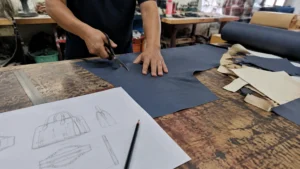
Handbag Manufacturer: A Complete Guide to Choosing an OEM/ODM Factory
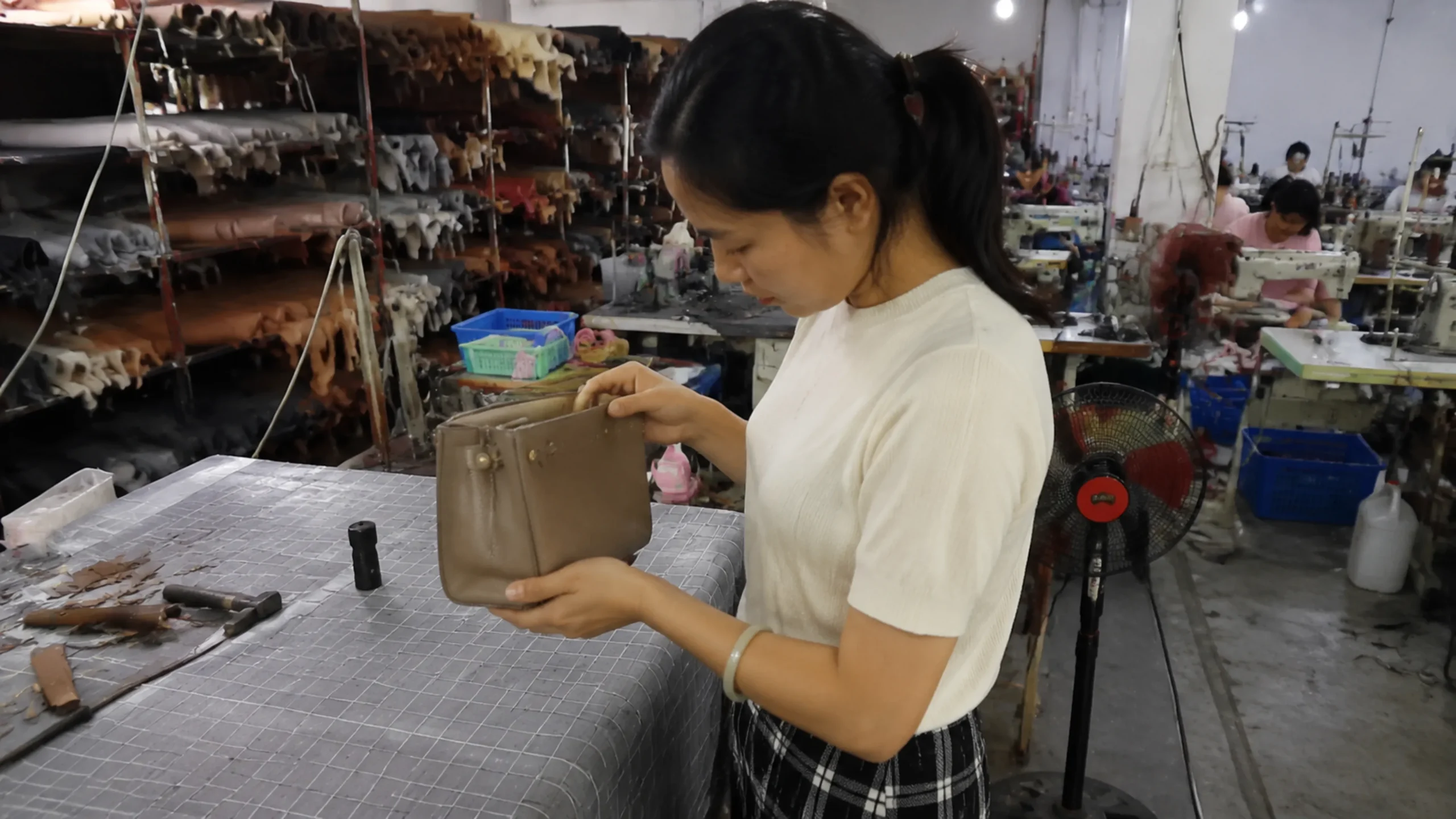
Direct Answer
A good handbag manufacturer should do more than cut and sew bags. For an OEM or ODM order, the right factory should understand your design goal, suggest suitable materials and hardware, make accurate samples, control quality during bulk production, and communicate clearly about MOQ, cost, lead time, and shipping terms. Before choosing a factory, check its product experience, customization ability, material library, certifications, sampling process, production capacity, quality control system, and willingness to explain risks before you pay a deposit.
Key Takeaways
-
Choose a handbag manufacturer based on product fit, not only low price.
-
OEM is best when you already have a design, tech pack, or reference sample.
-
ODM is useful when you need design development, material advice, or collection ideas.
-
Ask about MOQ, sample cost, sample lead time, bulk lead time, payment terms, and quality checkpoints before ordering.
-
A reliable factory should show real manufacturing experience, material options, QC steps, certifications, and clear communication.
Table of Contents
-
What does a handbag manufacturer do?
-
OEM vs ODM vs private label handbag manufacturing
-
What to prepare before contacting a factory
-
How to evaluate a handbag manufacturer
-
Factory qualification checklist
-
Materials, hardware, and customization ability
-
MOQ, sample cost, lead time, and payment terms
-
Quality control and compliance
-
Red flags when choosing a handbag factory
-
How to start working with Veggance
-
FAQ
What Does a Handbag Manufacturer Do?
A handbag manufacturer turns your bag concept into a physical product that can be produced repeatedly at commercial quality. Depending on the factory, this can include product development, pattern making, material sourcing, hardware sourcing, sampling, bulk production, quality control, packaging, export documentation, and logistics coordination.
For a new brand, the manufacturer may help translate a sketch, mood board, or reference photo into a production-ready sample. For an established retailer, the manufacturer may follow a detailed tech pack, produce a pre-production sample, and then scale the order across multiple colors or styles.
The most important point is this: a handbag factory is not just a supplier. It is part of your product development team. If the factory misunderstands the construction, material, hardware, or quality standard, the final product may look different from what your customer expects.
That is why choosing the right handbag manufacturer is one of the most important sourcing decisions for a fashion brand.
OEM vs ODM vs Private Label Handbag Manufacturing
Before you compare factories, you need to know what kind of manufacturing support you need.
| Manufacturing model | Best for | What the factory does | What you should prepare |
|---|---|---|---|
| OEM handbag manufacturing | Brands with a clear design | Produces according to your design, tech pack, sample, or reference | Tech pack, dimensions, material choice, logo details, quantity |
| ODM handbag manufacturing | Brands that need design support | Helps develop styles, structure, material combinations, and market-ready ideas | Mood board, target customer, price range, brand positioning |
| Private label handbags | New brands or retailers launching quickly | Adds your brand identity to existing or customized designs | Logo, packaging needs, preferred styles, target market |
| Fully custom handbags | Brands with a unique product concept | Develops patterns, samples, materials, hardware, and construction details | Sketch, reference photos, usage requirements, budget, timeline |
OEM is usually more precise because the buyer controls the design. ODM is more flexible because the factory can contribute design and production knowledge. Private label is often the fastest route for a new brand because it reduces development complexity.
At Veggance, we support OEM, ODM, and private label bag projects, especially for brands developing vegan leather bags, recycled material bags, and custom handbag collections.
What to Prepare Before Contacting a Handbag Factory
You do not need a perfect tech pack before contacting a handbag manufacturer, but you should prepare enough information for the factory to judge feasibility and quote responsibly.
At minimum, prepare:
-
Bag type: tote, crossbody, shoulder bag, hobo bag, sling bag, laptop bag, makeup bag, diaper bag, weekender bag, or another category.
-
Reference images: front, side, back, inside structure, handle or strap details.
-
Approximate dimensions: length, height, width, strap drop, pocket size.
-
Material preference: vegan leather, recycled PU, canvas, nylon, polyester, plant-based material, or other options.
-
Hardware preference: zipper, buckle, chain, logo plate, puller, rivet, snap, magnetic closure.
-
Logo method: embossing, hot stamping, metal plate, embroidery, woven label, printing.
-
Lining and packaging: inside fabric, care label, dust bag, hangtag, box, polybag.
-
Target quantity: sample quantity and estimated bulk quantity.
-
Target price range: even a rough range helps the factory suggest realistic materials.
-
Target market: retail, wholesale, ecommerce, boutique, chain store, or promotional use.
If you only have a sketch or mood board, tell the factory that you need development support. A good ODM handbag manufacturer should be able to help with pattern making, material matching, and construction advice.
How to Evaluate a Handbag Manufacturer
The best handbag manufacturer is not always the largest factory or the lowest-cost supplier. The best choice is the factory that matches your product type, order size, quality expectations, and communication style.
Use these criteria before choosing a partner.
1. Product Fit
A factory that mainly makes backpacks may not be ideal for premium handbags. A factory that specializes in structured handbags may not be the best choice for soft travel bags. Ask for examples that are close to your target product.
For example, if you are developing vegan leather tote bags with custom hardware, you should check whether the factory has experience with vegan leather, lining, edge finishing, logo customization, and hardware plating.
2. Sampling Ability
Sampling is where many problems appear. A reliable factory should be able to explain:
-
How it creates paper patterns
-
How it confirms dimensions
-
How it selects substitute materials if the final material is not ready
-
How many revisions are usually needed
-
How feedback should be marked and returned
-
Whether the sample fee can be credited after bulk order
At Veggance, sample development usually starts after design specifications and material choices are confirmed. For many projects, sample lead time is around 7-14 days depending on design complexity and material readiness.
3. Material Sourcing
Material choice affects cost, MOQ, lead time, durability, and sustainability claims. A strong handbag factory should have access to multiple material options, not only one standard PU supplier.
For sustainable collections, check whether the factory can work with recycled materials, plant-based alternatives, water-based PU, certified linings, and material dips for color and texture approval.
Veggance offers material options including recycled PU, recycled nylon and polyester, cactus leather, apple skin leather, coffee leather, bamboo leather, MIRUM, organic canvas, coated cotton canvas, raffia, and other vegan or bio-based materials.
4. Production Capacity
Capacity matters, but it must match your order size. If you are a small brand, you need a factory that accepts low MOQ without treating your order as unimportant. If you are a chain retailer, you need stable production capacity and repeatable quality.
Ask:
-
What is your MOQ per style and color?
-
What is your monthly production capacity?
-
How many lines can support this product type?
-
What is the normal lead time after sample approval?
-
How do you handle peak season?
Veggance states a flexible MOQ starting at 200 pieces per style/color for many custom handbag projects, with bulk production often around 45 days after deposit and sample approval.
5. Communication Quality
Good communication is not a soft requirement. It directly affects sample accuracy, bulk quality, delivery time, and dispute prevention.
A good factory should answer questions clearly, ask for missing details, explain trade-offs, and warn you when a request may increase cost or risk. If a factory agrees to everything immediately, be careful. Serious manufacturers know that every material, shape, structure, and hardware choice has production consequences.
Factory Qualification Checklist
Use this checklist before choosing a handbag manufacturer.
| Area | What to check | Why it matters |
|---|---|---|
| Product experience | Similar bag categories, materials, structures, and order sizes | Reduces sampling mistakes |
| OEM/ODM ability | Can follow tech packs and also support design development | Helps both established and new brands |
| Material library | Vegan leather, recycled materials, canvas, nylon, hardware, linings | Gives you better product and price options |
| MOQ | MOQ per style/color and mixed-color rules | Prevents budget surprises |
| Sampling | Sample fee, lead time, revision process, sample approval standard | Protects product accuracy |
| QC process | In-line inspection, final inspection, load-bearing tests, packaging check | Reduces returns and complaints |
| Certifications | ISO 9001, SMETA, BSCI, GRS, Disney FAMA, or relevant buyer requirements | Supports trust and compliance |
| Payment terms | Deposit, balance payment, refund rules, mold fees | Controls financial risk |
| Logistics | EXW, FOB, CIF, DDP, shipping documents | Helps calculate landed cost |
| Communication | Clear answers, written confirmation, photos, videos, timelines | Prevents misunderstandings |
Materials, Hardware, and Customization Ability
Many handbag quotes look similar at first, but the final product can be very different because of material and hardware decisions.
Exterior Materials
Common handbag materials include:
-
PU leather
-
Recycled PU
-
Water-based PU
-
Vegan leather
-
Plant-based leather alternatives
-
Canvas
-
Nylon
-
Polyester
-
Denim
-
Raffia
-
Straw-like woven materials
For sustainable or vegan handbag collections, brands often compare recycled PU, apple skin leather, cactus leather, pineapple leather, coffee leather, and other alternatives. Each has different cost, hand feel, surface texture, durability, MOQ, and story value.
If your brand wants to make sustainability claims, ask the factory what documents can support the claim. Textile Exchange explains that standards such as the Global Recycled Standard help support more credible recycled material claims and chain-of-custody systems.
Hardware
Hardware is often underestimated by new brands. Zippers, chains, buckles, magnetic snaps, feet, pullers, and logo plates can change the look and cost of a bag dramatically.
Ask your manufacturer:
-
Are standard hardware options available?
-
Can you customize logo pullers or metal plates?
-
What are the mold fees?
-
What plating colors are available?
-
Can the hardware pass pull tests or salt spray tests if needed?
-
What is the MOQ for custom hardware?
If custom hardware is important to your brand identity, confirm the cost and lead time early. Hardware molds are usually non-refundable because they are made specifically for your design.
Logo and Packaging
Private label handbag projects often need:
-
Embossed logo
-
Hot-stamped logo
-
Metal logo plate
-
Woven label
-
Printed lining
-
Custom zipper puller
-
Branded dust bag
-
Hangtag
-
Care card
-
Retail box
Your manufacturer should explain which options fit your material and budget. For example, embossing works differently on soft PU, thick vegan leather, canvas, and plant-based materials.
MOQ, Sample Cost, Lead Time, and Payment Terms
Commercial terms should be discussed before sampling, not after.
MOQ
MOQ depends on the material, color, hardware, logo method, and production setup. A low MOQ is helpful for new brands, but extremely low quantities may increase the unit price because the factory still needs to set up patterns, cutting, sewing, edge finishing, hardware, QC, and packaging.
For many custom handbag projects, Veggance offers MOQ starting at 200 pieces per style/color. Two-color orders may require a higher total quantity because each color needs separate material preparation and production planning.
Sample Cost
Sample cost depends on material and complexity. Standard PU or recycled material samples may cost less than premium plant-based vegan leather samples. Custom hardware, special molds, or unusual construction can add extra costs.
A good factory should explain whether the sample fee can be credited back after a bulk order.
Lead Time
A typical custom handbag timeline may look like this:
| Stage | Typical timing | What happens |
|---|---|---|
| Specification review | 1-3 days | Factory checks design, material, logo, and construction feasibility |
| Sampling | 7-14 days | Pattern, cutting, sewing, finishing, and initial QC |
| Sample review | Depends on buyer | Buyer checks size, material, structure, logo, and hardware |
| Bulk production | Around 45 days after approval | Material procurement, cutting, sewing, QC, packing, shipment preparation |
| Shipping | Depends on method and destination | Air, sea, express, or DDP service if available |
Payment Terms
Many factories use 30% deposit and 70% balance payment before shipment or against shipping documents. For international orders, clarify the payment method and shipping term in writing.
Common trade terms include EXW, FOB, CIF, and DDP. The International Chamber of Commerce publishes the Incoterms rules, which are widely used to define the responsibilities, costs, and risks between buyer and seller in international trade.
Quality Control and Compliance
Quality control should not happen only at the end of production. It should be built into the whole order.
For handbag manufacturing, QC usually includes:
-
Material inspection before cutting
-
Color and texture confirmation
-
Pattern and cutting accuracy
-
Stitching density and straightness
-
Edge paint smoothness
-
Logo position and clarity
-
Hardware function and finish
-
Strap strength and load-bearing test
-
Lining cleanliness
-
Zipper smoothness
-
Odor check
-
Size tolerance check
-
Packaging protection
-
Final random inspection
For brands and retailers, certifications can also matter. ISO describes ISO 9001 as a quality management standard used by organizations of any size. Sedex describes SMETA as a widely used social audit for labor, health and safety, environmental performance, and ethics. These certifications do not replace product inspection, but they help buyers understand whether a supplier has systems and ethical production practices in place.
When evaluating a handbag manufacturer, ask for copies of relevant certificates, audit reports, or factory profiles if your company requires them.
Red Flags When Choosing a Handbag Factory
Be careful if a supplier shows these signs:
-
The quote is much lower than every other supplier but the material details are unclear.
-
The factory cannot explain its MOQ logic.
-
The supplier says every material and hardware option is possible without checking availability.
-
The factory refuses to discuss sample revisions.
-
The supplier cannot show similar products or production photos.
-
The factory gives no written timeline.
-
The quote does not separate sample fee, mold fee, packaging, shipping, or payment terms.
-
The supplier avoids quality control questions.
-
The factory cannot explain whether it is a real manufacturer or a trading company.
-
The salesperson pushes for deposit before confirming product details.
A serious handbag manufacturer should welcome detailed questions. If your brand is preparing to invest in samples and bulk production, you need a partner who is willing to clarify risks early.
How to Start Working with Veggance
Veggance is a custom handbag manufacturer supporting OEM, ODM, and private label handbag projects for brands, retailers, ecommerce sellers, wholesalers, and distributors. Our team works with traditional vegan leather, recycled materials, plant-based alternatives, custom hardware, logo customization, packaging, and quality-controlled bulk production.
For new brands, we can help turn sketches, reference photos, or mood boards into production-ready samples. For established buyers, we can follow tech packs and support private label or OEM production with clear MOQ, sampling, quality, and shipping communication.
To get a practical review, send us:
-
Your bag sketch, reference photo, or tech pack
-
Target material
-
Approximate size
-
Logo and packaging needs
-
Estimated order quantity
-
Target market
-
Expected launch timeline
Then we can help you check material feasibility, MOQ, sample cost, lead time, and production risks before you commit to bulk production.
If you are choosing a handbag manufacturer for your next collection, send your design idea or tech pack to Veggance. We can review your material, MOQ, sampling, and production plan before you place an order.
FAQ
What is a handbag manufacturer?
A handbag manufacturer is a factory that develops and produces bags for brands, retailers, wholesalers, or private label buyers. It may handle pattern making, material sourcing, sampling, bulk production, quality control, packaging, and export support.
How do I choose a handbag manufacturer?
Choose a handbag manufacturer by checking product experience, OEM/ODM capability, material options, MOQ, sample process, production capacity, QC system, certifications, and communication quality. Do not choose only by the lowest unit price.
What is the difference between OEM and ODM handbags?
OEM handbag manufacturing means the factory produces according to your design, tech pack, or sample. ODM handbag manufacturing means the factory also helps with design development, material suggestions, patterns, and product ideas.
What should I prepare before contacting a handbag factory?
Prepare reference photos, dimensions, target material, logo method, hardware details, lining and packaging needs, target quantity, and price range. If you do not have a tech pack, send sketches or mood boards and ask for ODM support.
What is the MOQ for custom handbags?
MOQ depends on material, color, hardware, and design complexity. For many custom handbag projects, Veggance offers MOQ starting at 200 pieces per style/color, with higher quantities for multi-color or complex custom orders.
How long does it take to make a custom handbag sample?
Sample lead time depends on design complexity and material readiness. For many projects, a custom handbag sample can be completed in about 7-14 days after design details, materials, and sample payment are confirmed.
How long does bulk handbag production take?
Bulk production often takes around 45 days after deposit and final sample approval, depending on material procurement, order quantity, production schedule, packaging, and quality control requirements.
What certifications should a handbag factory have?
Useful certifications or audit references may include ISO 9001, SMETA, BSCI, GRS, Disney FAMA, or other buyer-required standards. The right certificates depend on your market, retailer requirements, material claims, and compliance needs.
Can a small brand work with a handbag manufacturer?
Yes. Small brands can work with a handbag manufacturer if the factory supports lower MOQ, sampling, private label development, and clear communication. A 200-piece MOQ can be a practical starting point for some custom handbag projects.
Is vegan leather suitable for custom handbags?
Yes, vegan leather can be suitable for custom handbags, but the right material depends on your target price, durability needs, hand feel, sustainability story, and production MOQ. Always request material dips or samples before bulk production.