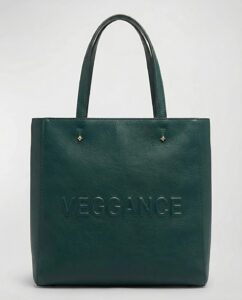
A fitting only a few centimeters wide can change the character of a bag when its material changes.
Ceramic is now being explored in leather goods hardware.
A bright polished surface or a soft matte finish can give a small detail a different look and feel.
With a suitable material grade and finish, ceramic can offer lasting color and resistance to everyday wear.
These qualities make it worth assessing for small, frequently touched parts.
Strong impacts, thin walls, and sharp corners still need careful review.
Ceramic is an emerging option for leather goods hardware, but current evidence does not show that it is becoming a mainstream replacement for metal.
Brand projects and supplier collections show real uses.
They do not yet show broad market adoption.
For brands and buyers, the main questions are practical: Where does ceramic add value?
Which parts can use it?
What needs testing before production?
What Is Ceramic Hardware for Leather Goods?
Ceramic hardware refers to ceramic parts used in bag fittings and details.
These may include decorative clasp covers, chain links, handle sections, logo pieces, and charms.
The term needs care.
A ceramic part, a ceramic coating, and a surface that looks like ceramic are different products.
Engineering Ceramic and Traditional Ceramic

Engineering ceramics, such as zirconia, are made for controlled material properties.
Their performance depends on the material grade, production process, shape, and surface finish.
Kyocera’s zirconia material guide describes it as an engineering ceramic with high strength and toughness compared with many other ceramics.
It also notes that mirror-finished zirconia is used in decorative watch parts.
This makes it relevant to small fashion components, though each bag application still needs testing.
Traditional pottery, porcelain, and stoneware offer a different design direction.
They can provide handmade shapes and glazed finishes.
Their appearance and performance should not be treated as the same as engineered zirconia.
Solid Ceramic, Coatings, and Ceramic-Look Materials
| Description | What it means | What buyers should confirm |
|---|---|---|
| Solid ceramic component | The part itself is ceramic | Material grade, dimensions, finish, and test results |
| Ceramic and metal assembly | Ceramic is combined with metal parts | Which material carries the load and how the parts connect |
| Ceramic-coated component | A coating is applied over another material | Base material, coating type, thickness, and wear performance |
| Ceramic-look component | Another material creates a ceramic-like appearance | Actual composition and surface treatment |
Product names can also cause confusion.
Ottolinger’s C Band Signature Ceramic Bag lists its material as 100% thermoplastic polyurethane, or TPU, and describes metal handles.
Its name alone does not make it evidence of ceramic hardware use.
How Have Brands Used Ceramic in Bags and Accessories?
Ceramic has appeared in bag design for several years.
The examples below cover runway collaborations, retail accessories, mixed-material details, and collectible pieces.
They show different uses, rather than one shared material specification.
A product described as ceramic or porcelain should not be assumed to use engineering-grade zirconia.
The sources below do not establish the same strength, wear resistance, or load capacity for every example.
LOEWE × Takuro Kuwata: Ceramic Details on Flamenco Clutches
For its Fall/Winter 2020 collection, LOEWE worked with Japanese ceramic artist Takuro Kuwata.
Handcrafted ceramic pieces were added to the drawstrings of Flamenco clutches.
The Takuro Kuwata × LOEWE collaboration brought ceramic texture and color to the bag’s leather drawstring.
This is a direct example of ceramic meeting leather in a bag detail.
The irregular shapes and ceramic surfaces created a contrast with the clutch’s soft form.
It also shows that ceramic bag decoration has a history, even though its wider use in hardware remains a separate question.
Fendi: A Sculpted Ceramic Handle
For Design Miami 2025, Conie Vallese created the Fonderia Fendi project.
The Fendi and Conie Vallese collaboration included a Peekaboo bag with a sculpted ceramic handle featuring a flower.
Officine Saffi Lab’s project page also confirms the workshop’s ceramic development work for the wider project.
This shows how ceramic can support a brand’s craft story and create a strong visual feature.
It is a collectible design example, rather than evidence of wide use across everyday bag collections.
Alina Petra: A Handle That Also Works as Jewelry
The Gold and Ceramic Black Diamond Handle Handbag by Alina Petra has a handle made from 14K white gold and ceramic, with black diamonds.
The handle can be removed and worn as a bracelet.
This example connects the bag accessory with jewelry.
It offers a reference for removable handles and parts that have more than one use.
Its specialist design does not establish demand across the wider handbag market.
Chloé Joyce: A Ceramic Bag Charm and Necklace
The Chloé Joyce Ceramic Bag Charm combines ceramic and leather.
Its pendant uses neriage, a method of blending different colors of clay to create patterns.
It can also be worn as a necklace.
The retained listing states that the item is no longer available.
This shows how ceramic can enter a bag collection through a separate accessory.
It supports a discussion of color, handmade patterns, and multiple uses, rather than structural hardware performance.
Mireya Andrea: Ceramic and Silver in One Detail
The Mireya Andrea–Slate bag offers a Perla amulet option.
Mireya describes it as a hammered strip of silver with a reversible ceramic piece, developed with Warmis, a workshop in Samaipata, Bolivia.
The ceramic-and-metal detail adds a distinct feature to a leather bag without changing all its fittings.
It is a useful reference for brands exploring a small, repeatable detail across a collection.
All The Clay Horses: Porcelain, Leather, and Metal
The Bag Bolo by All The Clay Horses combines a handmade porcelain charm with braided leather, metal bolo fittings, and a removable clasp.
It can attach to a bag, keychain, or another accessory.
This example shows how several materials can work together.
Porcelain provides the shaped, glazed feature.
Leather and metal provide the connecting elements.
The design does not establish the suitability of porcelain for a load-bearing clasp.
BABE’S HARDWARE: Ceramic Beads in a Mixed-Material Charm
The Eva Bag Charm by BABE’S HARDWARE combines ceramic, acrylic, and glass beads with a gold-plated spring carabiner.
It can be used as a bag charm or keychain.
Ceramic is one element within the accessory, rather than the material for every part.
This is a practical design reference for adding color and texture through small components.
Rita Roslin: A Collectible Porcelain Bag
The Large Porcelain Bag by Rita Roslin has a hand-formed porcelain body and porcelain links at its sides.
A crocheted handle passes through those links.
The maker describes the listed piece as a one-off sample.
This extends the discussion beyond leather goods hardware into collectible bag design.
It shows a ceramic-and-textile construction, but it should not be used as evidence of reliable mass production or everyday load performance.
ToShape: A Retailer-Listed Ceramic Bow Design
The ToShape Ceramic Bow Leather Shoulder Bag is described by retailer CHINASQUAD as using handmade ceramic bow decorations with zinc-alloy hardware.
The listing presents a clear design idea: ceramic provides the sculptural decoration while metal remains part of the hardware system.
Its brand fields are not fully consistent, so the materials and brand attribution should be confirmed with the maker before using it as a verified production reference.
Suppliers: Ceramic Components Are Available
A published zirconia ceramic hardware collection includes ceramic chains, square rings, and ceramic-and-stainless-steel chains.
These listings show that development options exist on the supply side.
The same supplier’s November 2025 article on ceramic in leather hardware describes such projects as being at an early stage.
This is a supplier’s market observation, not an independent measure of sales or adoption.
Why Might Brands Consider Ceramic Handbag Hardware?
Based on these examples, ceramic offers several possible design benefits.
These are reasons to explore the material, rather than proof that it will become a major trend.
A Different Surface and Feel
Polished ceramic can provide a smooth surface and a different look from plated metal.
Traditional glazed ceramics can also bring visible texture and variation.

A small ceramic insert may be enough to change the character of a bag.
A brand does not need to redesign every fitting to explore the effect.
In custom top handle bags, the handle can provide the main visual detail.
In custom clutch bags, a closure or small handle can serve a similar role.
Possible design uses include:
- A colored insert on a metal clasp.
- A ceramic detail within a short handle.
- A decorative piece on a simple flap.
- A small charm that can be removed or replaced.
The finish should be assessed with the selected handbag materials, lining, and metal parts.
A ceramic sample viewed alone may look different once assembled.
Color and Surface Finish
Polished and matte finishes can create different effects on the same bag shape.
A ceramic detail may provide a bright focal point or a softer surface beside leather and metal.
Color stability should be checked on the specified material and finish.
Buyers should confirm whether the color comes from the ceramic body, a glaze, or an added coating.
Each option needs its own approval samples and wear checks.
Resistance to Everyday Scratching
High-tech ceramic can offer strong resistance to everyday scratching.

Rado explains that its ceramic is highly scratch-resistant, but it can still be scratched by materials of equal or greater hardness.
Scratch-resistant does not mean scratch-proof.
Performance claims should match the ceramic grade and finish used in the final component.
A Recognizable Brand Detail
Ceramic may help a brand develop a repeated visual detail across a collection.
A clasp insert could appear on a shoulder bag, wallet, and card holder.
CHANEL’s long use of ceramic in the J12 watch shows how a material can become part of a product’s identity.
This is a useful design reference, though it does not prove that the same approach will succeed in handbags.
For a bag brand, the detail still needs to suit the product’s price, use, and customer.
How Does Ceramic Compare with Metal Bag Hardware?
Neither material is best for every part.
The comparison should use a specific ceramic grade and metal alloy, rather than broad claims about “ceramic versus metal.”

| Factor | Ceramic considerations | Metal considerations |
|---|---|---|
| Appearance | Can offer polished, matte, or glazed effects, depending on the material | Offers many alloy, plating, coating, and texture options |
| Scratching | Some engineering ceramics have strong scratch resistance | Performance depends on the alloy and surface finish |
| Impact | Chipping or fracture needs careful evaluation | Some metals may bend or dent; behavior varies by alloy |
| Moving mechanisms | Needs application-specific engineering | Commonly used for springs, pins, hooks, and locking parts |
| Weight | Depends on ceramic type, size, and construction | Depends on alloy, size, and construction |
| Development | May require specialist forming, firing, and finishing | Processes and suppliers are well established for many bag fittings |
| Repair | Depends on whether the ceramic part can be removed | Depends on the fitting and attachment method |
Ceramic is not automatically lighter than metal.
Some zirconia grades have a density of about 6 g/cm³.
Buyers should compare the weight of complete assemblies, including metal supports and fasteners.
A ceramic detail that needs a thicker section or extra backing may offer little weight saving.
Which Bag Components Are Worth Exploring First?
A useful starting point is a part with a clear visual role and controlled exposure to impact.
Zipper pullers, decorative pieces, and ceramic-and-metal assemblies are possible areas to explore.
Corner details also need careful review because they may take a direct impact.
The priorities below are development suggestions.
They are not universal material approvals.
| Component | Possible approach | Main concern |
|---|---|---|
| Decorative logo insert | Set ceramic into a protected base | Edge damage and attachment strength |
| Clasp face or cover | Use ceramic over a metal mechanism | Impact, fit, and repeated opening |
| Zipper puller | Combine a ceramic touch surface with a suitable connector | Repeated pulling, twisting, and collisions |
| Corner detail | Evaluate a protected insert or supported decorative cap | Direct impact, edge damage, and attachment strength |
| Removable charm | Use ceramic as a separate accessory | Collisions, drops, and ease of replacement |
| Decorative handle section | Combine ceramic with a suitable support structure | Grip pressure, bending, and impact |
| Chain links | Evaluate ceramic-and-metal assemblies | Load, twisting, and link-to-link contact |
| Bag feet | Test as a ground-contact component | Concentrated loads and impact when setting the bag down |
| Main strap rings or hooks | Treat as a demanding structural project | Repeated loading and sudden pulling |
Ceramic Bag Charm Design Options
A ceramic bag charm adds a ceramic detail to an existing bag without changing its main body or closure.
It may use a single shaped pendant, ceramic beads, or a ceramic-and-metal assembly.
The brand examples above show several of these approaches.
As with other custom bag charms, buyers developing a custom ceramic bag charm should specify the ceramic type, size, finish, attachment method, and weight.
Check how it moves against the bag, whether it strikes other fittings, and how it can be replaced.
A decorative charm still needs drop, pull, and surface-contact checks.
Decorative Parts Still Face Real Loads
“Decorative” does not mean free from stress.
A charm may strike a wall.
A clasp cover may hit a table.
A logo piece may catch on clothing.
The test plan should reflect where the part sits and how the bag moves during use.
Metal and Ceramic Can Share Different Roles
In a mixed-material design, metal can carry structural loads or provide the spring, pin, and locking action.
Ceramic can provide color, gloss, and touch.
The role of each material should be clear in the drawing and confirmed through testing.
The connection between those materials needs as much attention as the ceramic itself.
For custom bag straps, review the fitting together with the strap width, leather loop, and metal connector.
Buyers should ask whether the design uses a setting, fastener, adhesive, or another method.
They should also ask how the connection will be checked.
What Makes Ceramic Hardware Difficult to Develop?
Hardness is only one part of material performance.
Shape, connections, production control, and repair all affect whether a ceramic fitting works in a finished bag.
Impact and Stress at Small Points
Rado’s material guidance states that its ceramic watches may break if dropped.
This is a useful reminder that high hardness does not remove the risk of impact damage.
For bag fittings, designers should review:
- Thin sections and exposed edges.
- Holes close to an edge.
- Sharp internal corners.
- Tight contact with metal pins or fasteners.
- Long sections exposed to bending.
These are areas for engineering review.
The supplier should recommend dimensions based on the actual material and use.
Production and Color Control
Ceramic production can involve forming, high-temperature sintering, grinding, and polishing.
CHANEL describes these steps in its J12 production process and explains that different colors require changes to formulation and processing.
Each stage needs control to deliver the intended shape, fit, and finish.
A promising design becomes a usable component only when these results can be repeated across production.
Bag buyers should request approved limits for:
- Dimensions and fit.
- Color and gloss.
- Surface marks.
- Edge condition.
- Visible differences between batches.
A general color reference should be supported by approved physical samples.
The contract should also define how parts are inspected.
Total Cost and Replacement
The component price is only one part of the cost.
A quote should separate tooling, samples, finishing, assembly, inspection, packaging, and spare parts.
There is no reliable universal price premium for ceramic handbag hardware.
The result depends on the design, quantity, process, and supplier.
Replacement also matters.
A small damaged detail should not be overlooked simply because the bag’s leather body remains usable.
Brands should decide early whether that detail can be changed and what tools the repair requires.
What Should Buyers Test Before Approving Ceramic Bag Hardware?
Test the component and the finished bag.

A loose sample cannot show how a fitting performs once attached to leather, backing, screws, and other parts.
This follows the same principle used when testing new bag materials: a promising material sample still needs validation in the finished construction.
The following table provides a starting point for a project-specific test plan.
Test conditions and acceptance limits should be agreed before approval.
| Check | What to assess | What to record |
|---|---|---|
| Appearance | Color, gloss, marks, and edge quality | Approved samples and defect limits |
| Dimensions and fit | Contact with bases, pins, and neighboring parts | Drawings, tolerances, and inspection results |
| Pull and twist | Strength of the part and its connections | Applied loads, directions, and failure points |
| Repeated use | Opening, closing, movement, and loosening | Cycle count, function, and visible changes |
| Loaded-bag drops | Impact in realistic bag configurations | Bag load, height, surface, and impact positions |
| Surface wear | Contact with other parts and common surfaces | Test method and before-and-after condition |
| Care-product exposure | Response to relevant cleaners and products | Substances, exposure time, and changes |
| Packaging and transport | Damage from movement and contact in shipment | Packing method and inspection findings |
Check Function After the Test
Inspection should go beyond visible cracks.
A ceramic cover may remain whole while its connection becomes loose.
A clasp may still close but no longer align correctly.
Depending on the assembly, checks may include:
- New movement between parts.
- Loose fasteners.
- Changes in opening force.
- Chipped edges or sharp areas.
- Marks on the leather.
- Damage to nearby metal finishes.
Keep a Clear Approval Record
Retain the approved hardware sample, drawing, material specification, finish reference, and test report.
If the supplier changes the ceramic grade, shape, attachment method, or finish, review whether testing must be repeated.
A visually similar part may not perform in the same way.
How Can Brands Start a Ceramic Hardware Project?
A focused first project makes development easier to assess.
- Choose one detail.Start with a clasp insert or protected decoration before changing several structural fittings.
- Define the use.State the bag type, expected load, contact points, and likely wear conditions.
- Confirm the material and structure.Request the ceramic grade, drawings, attachment method, and proposed production process.
- Approve working samples.Review the fitting on the actual bag, not only in a rendering.
- Validate a trial production run.Check consistency across several parts and assembled bags before committing to larger quantities.
Evidence of a wider trend would include repeated use across seasons, several unrelated brands adopting the material, and suppliers supporting consistent production.
The examples available today are useful starting points, but they do not establish those conditions across the market.
Conclusion
Ceramic can add color, texture, and a distinct finish to bag details.
Reliable use depends on the right material, structure, and testing.
Planning your next collection?
Work with Veggance and send us an inquiry to discuss your design, materials, custom hardware, and sampling needs.