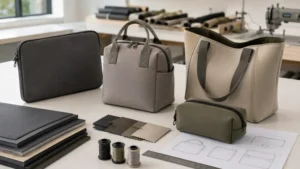
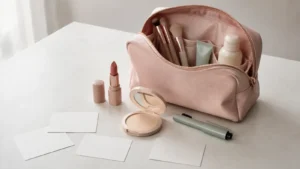
A cosmetic bag keeps makeup, skincare products, and beauty tools together. It can hold a few items inside a handbag or organize a larger collection for travel.
The right design depends on what goes inside. A pouch for lipstick and powder needs a different layout from a bag for bottles, palettes, and brushes. Size, opening, lining, and compartments all affect how easy the bag is to use.
This guide explains what a cosmetic bag is, how common styles differ, how brands use custom cosmetic bags in different business settings, and what to check when choosing or developing one.
What Is a Cosmetic Bag?
A cosmetic bag is a portable bag or case used to store, organize, and carry makeup, skincare products, and small beauty tools.
It may have one open space or several pockets and sections.
Some designs are soft and fold easily. Others have padding or firm panels to help hold their shape. Zippers are common, but the category also includes bags with drawstrings, fold-over sections, or other closures.
The name describes the bag’s main use. It does not mean every cosmetic bag has a mirror, brush holders, or a waterproof lining.
How Is It Different from a General Pouch?
A general pouch can hold many kinds of small items. A cosmetic bag is chosen or designed around beauty products.
The two categories can overlap. A simple lined zipper pouch may work well for makeup. A more detailed cosmetic bag may add bottle pockets, a brush cover, or dividers.
The useful question is whether the opening, inside space, and materials suit the products you plan to carry.
What Is a Cosmetic Bag Used For?
Cosmetic bags help keep small products together and make them easier to move between places. Their contents change with the user’s routine.
| Use | Typical contents | Features to consider |
|---|---|---|
| Daily touch-ups | Lipstick, powder, concealer, and a small mirror | Compact size and easy access |
| Home storage | Makeup, skincare, and beauty tools | A stable base and a clear view inside |
| Travel | Cosmetics, skincare bottles, and brushes | Suitable height, secure closure, and separate storage |
| Brush storage | Brushes, pencils, and small tools | Enough length and a cover for brush heads |
| Professional use | A wider range of products and tools | Clear sections, suitable support, and carrying comfort |
| Branded sets | A selected makeup or skincare range | Dimensions and presentation matched to the products |
Everyday Makeup Storage
For daily use, start with the items you reach for most often. A compact pouch may be enough for a few lip products, mascara, and powder.
Too many small pockets can make a simple routine harder. Check whether you can reach an item without moving everything else.
Travel and Home Organization
For travel, check the full set of products together. Bottles, palettes, and brushes take up space in different ways.
At home, the bag may stay open on a shelf or dressing table. A wider base or opening may be useful if you want to see several products at once.
Cosmetic Bag vs. Makeup Bag vs. Toiletry Bag
Cosmetic bag and makeup bag are often used for the same product. Cosmetic bag may also describe storage for skincare and other beauty items.
A toiletry bag usually focuses on personal care products, such as toothpaste, shampoo, deodorant, and shaving tools. The names overlap because many people carry makeup and wash products together.
| Term | Usual focus | Common format |
|---|---|---|
| Cosmetic bag | Makeup, skincare, and beauty accessories | A pouch, organizer, or case |
| Makeup bag | Makeup and makeup tools | A compact pouch or divided organizer |
| Toiletry bag | Washing, grooming, and personal care products | A travel pouch or organizer |
| Cosmetic case | Beauty products that need a more defined layout | A shaped or structured case |
Size alone does not decide the name. A makeup bag can be large, and a toiletry pouch can be small.
For more about product names and regional terms, read what a makeup bag is called.
Can You Use One Bag for Both Makeup and Toiletries?
Yes, if the bag fits the items and gives you enough access.
Check where you will place creams, bottles, powders, and brushes. Separate pockets or smaller pouches can help keep them apart. Close each container securely before packing.
If bottles and grooming products make up most of the contents, a toiletry bag may offer a more useful layout.
What Are the Main Types of Cosmetic Bags?
Cosmetic bags can be grouped by shape, construction, and features. These groups are not fixed. A clear bag can also be box-shaped, and a hanging organizer can include a separate brush section.
| Type | Main design feature | Common use |
|---|---|---|
| Flat zipper pouch | A slim body with little depth | A few small or flat products |
| Pouch with a wider base | Extra space at the bottom or sides | Everyday makeup and small bottles |
| Box-shaped cosmetic bag | A defined base, sides, and lid | Products that need more organized space |
| Hanging organizer | Sections that unfold from a hanging point | Travel where counter space is limited |
| Clear cosmetic bag | Transparent panels | Seeing contents without opening every section |
| Brush pouch or roll | Long slots or a separate tool section | Brushes, pencils, and small tools |
| Cosmetic bag set | Two or more bags with related designs | Separating products by size or use |
Soft Pouches and Structured Cases
A soft pouch can fit around other items inside a handbag or suitcase. It may also fold down when empty.
A structured case holds a more defined shape. Depending on its design, it can support dividers and provide space for bottles or palettes.
Check the finished product rather than judging it by appearance. A firm-looking shell does not tell you how well the inside holds or cushions the contents.
Brush Storage
Brush storage needs enough length for the whole tool, including its head.
Slots should hold the handles without making removal difficult. A protective flap can keep brush heads away from other products and the zipper.
For a mixed collection, compare a built-in brush panel with a separate pouch. Try both layouts with the brushes you expect to use.
What Materials Are Cosmetic Bags Made From?
Cosmetic bags use leather, synthetic leather, woven fabrics, and clear films. Material choice affects the look, feel, structure, and care needs.
The outer material and lining should be considered together.
| Material | Common design direction | What to check |
|---|---|---|
| Cotton or cotton-blend canvas | Casual pouches, printed designs, and gift collections | Fabric weight, lining, and washing instructions |
| Nylon | Lightweight pouches and travel organizers | Fabric construction, finish, and care method |
| Polyester | Printed bags, organizers, and coordinated sets | Fabric grade, backing, and surface finish |
| PU and other faux leather | Smooth or textured fashion accessories | Surface quality, backing, flexibility, and cleaning method |
| Genuine leather | Accessories with a natural leather look and feel | Leather type, finish, thickness, and care needs |
| Clear PVC or TPU film | Transparent pouches and organizer panels | Clarity, flexibility, surface marking, and construction |
These materials can also be combined. A transparent cosmetic bag, for example, may use clear panels with PU trim.
Why the Lining Matters
The lining is the surface most likely to meet loose powder, cream, or a leaking product.
A smooth surface may be easier to wipe than a textured one. The result still depends on the material and stain. Do not assume that every lining can be washed or that every mark will come out.
For product development, test a lining sample with the products the bag will carry. Follow the proposed care method and check for marks, color change, or surface damage.
Quilting Is a Design Treatment
Quilting uses stitching to hold layers together. A quilted cosmetic bag may use cotton, nylon, polyester, or another outer material.
When comparing quilted bags, check the fabric, filling, stitch pattern, and lining. The word quilted does not identify the full material construction.
Recycled and Plant-Based Options
For a recycled material, ask which part contains recycled content and how that content is verified. A recycled outer fabric does not mean the lining, zipper, and thread are also recycled.
The RCS and GRS standards address recycled material verification and supply chain tracking. Product claims should match the available evidence.
For plant-based leather alternatives, check the full composition and finish. The plant source alone does not describe the whole material.
How Do You Choose the Right Cosmetic Bag?
Start with the products you plan to carry. Put them together, check their dimensions, and decide how you want to arrange them.
Check the Usable Inside Space
Outside measurements do not show the exact space inside. Seams, lining, padding, and dividers all take up room.
For example, an 18 cm brush may not fit a bag that measures 18 cm on the outside. Its shape and the length of the opening also matter.
Check these points:
- Can the longest brush lie inside without bending its bristles?
- Can bottles stand upright if needed?
- Can the largest palette pass through the opening?
- Does the lid close without pressing on the contents?
- Can you reach smaller items near the bottom?
For a custom design, share the product dimensions with the manufacturer before the pattern is finalized.
Test the Opening
A roomy bag can still be awkward if its opening is too narrow.
Open it fully and try taking out the largest item. Check whether the zipper catches the lining or brushes. If the bag has a wide-opening frame, test it both empty and loaded.
A flat-opening design may make products easier to see. It also needs enough space around it when open.
Match the Compartments to the Contents
More compartments are useful only when they fit the items.
A bottle pocket should match the bottle’s height and width. Brush loops should suit the handle sizes. A divider should stay in position during normal handling.
For a small daily pouch, one main section and a small pocket may be enough. For a larger collection, separate spaces can make access easier.
Check Support and Carrying Comfort
Load the bag before checking the handle, base, and shape.
Lift it as you normally would. Set it down, open it, and remove a few items. Watch whether it tips, sags, or becomes difficult to carry.
For hanging designs, check the hanging point with the intended load. An empty display sample will not show how the bag behaves when full.
Check What Water Resistance Means
A wipe-clean surface, a water-resistant material, and a leak-resistant finished bag describe different things.
If keeping spilled liquid inside is important, ask about the seams, closure, and finished-bag testing. Material choice alone does not establish that performance.
Bottle caps still need to be closed securely. A cosmetic bag should not be treated as a replacement for a sealed container.
How Should You Clean and Care for a Cosmetic Bag?
Follow the care label or the maker’s instructions. Cleaning needs depend on the complete bag, including its lining, trim, filling, and hardware.
A Basic Cleaning Routine
- Empty the bag. Remove products, brushes, and detachable sections.
- Remove dry residue. Gently shake out loose powder and brush away debris.
- Check the care instructions. Confirm whether the bag allows wiping, hand washing, or machine washing.
- Test the approved cleaner. Try it on a small hidden area before treating a visible stain.
- Clean gently. Avoid soaking parts that are not meant to be submerged.
- Let the bag dry fully. Leave it open and follow the recommended drying method.
Match the Method to the Finished Bag
Do not assume a fabric bag is machine washable. It may contain a firm insert, leather trim, or other parts that need a different method.
Use the recommended products on leather and coated surfaces. Strong solvents can damage some materials. For example, Truffle’s care instructions warn against alcohol and acetone-based products on its bags.
Make Cleaning Easier During Use
Close liquids and creams before putting them away. Remove loose powder when you notice it.
A separate pouch for brushes or a removable inner section can also make regular care easier. Check that those parts have clear care instructions of their own.
How Do Brands Use Custom Cosmetic Bags? Three Common Business Uses
For brands, a cosmetic bag can do more than hold products. It can be merchandise sold on its own, a monthly item in a subscription box, or a gift included with a purchase.
Each use has different buying needs. The development priorities also change.
Brand Merchandise and Limited Editions: Rhode
Beauty brands often launch bags as branded merchandise alongside skincare and makeup products. Rhode is one example.
For its 2025 birthday collection, Rhode introduced a larger Bubble Bag than the version previously included in its sets. The collection also included scented lip products and a clip-on lip case.
According to information compiled by users in the Sephora Community, the bag measured about 17.79 × 13.7 inches. It was available on its own and in a set that combined the bag with seven full-size skincare products.
For summer 2026, Rhode’s merchandise included a terry cloth Terry Bag for everyday essentials, a towel, and two limited-edition lip cases. Media coverage also noted a change from earlier summers. Branded accessories had mainly appeared in social media marketing rather than being offered for sale. For this launch, customers could buy them.
These examples suggest several points for product development:
- A bag can be sold alone or used as part of a set. Development should consider both uses, including whether the full product range fits inside.
- Materials and colors may change each season. Limited editions often involve smaller quantities, several production runs, and a fixed launch date.
- Brand recognition comes from appearance and details. Material feel, color, logo application, and zipper pullers can affect whether customers want to buy and share the bag.
- The shape may need to support more than one use. Customers may use a bag differently from the brand’s original plan. Some may use a large cosmetic bag to hold a tablet, for example. This is worth considering during design.
Subscription Boxes: ipsy Glam Bag
Subscription boxes are another common buying setting. These projects need bags delivered every month, with designs that keep changing.
With the US beauty subscription service ipsy, members receive a Glam Bag each month with a personalized selection of beauty samples. The bag design is not fixed:
- Monthly themes change. The February 2022 bag used matte faux leather with a heart print. The May 2024 design featured an all-over floral print and a gold-tone branded zipper puller. The print placement varied slightly on the front and back of each bag.
- Bag formats differ across subscription tiers. Past Glam Bag Plus designs included a very soft microfiber drawstring bag with woven branding. Other examples included bags with a velvet feel and designs with faux leather straps that could be used as clutches. A three-in-one design used a removable, adjustable strap so the bag could also serve as an everyday accessory.
- A dedicated team develops the bags. ipsy has shared how its in-house bag designers move from inspiration and design to production.
For manufacturers and buyers, these examples raise several practical points:
- Monthly design changes create ongoing sampling and production demands. Fabrics, prints, and trims need early approval to keep deliveries on schedule.
- Consistent quality matters more than making each design complex. Color, dimensions, and material feel should stay consistent across batches of the same design.
- The bag affects the subscription experience. Subscribers do not all value it in the same way. Some say they subscribe for the products rather than the bag. Others would prefer the bag as an optional add-on. Designs should consider actual use as well as a fresh appearance.
- A shared base pattern can help control development costs. Changing the fabric or print while keeping the same basic shape may reduce the work needed each month. Discuss the approach with the factory in advance.
Gifts and Giveaways: From Gift with Purchase to Corporate Gifting
Cosmetic bags are also widely used as gifts. Common uses include:
- Gift with purchase (GWP): A bag offered when customers spend a set amount, often for launches, promotions, or major sales events.
- Seasonal gift sets: A bag combined with skincare or makeup for Christmas, Valentine’s Day, Mother’s Day, or another occasion.
- Member rewards: A gift used to attract new members, support membership upgrades, or thank existing members.
- PR packages: Product sets sent to media, creators, and partners, with the bag helping present the brand.
- Corporate gifts: Bags for customer appreciation, employee benefits, conferences, or events.
- Hotels, airlines, and premium events: Bags for personal care products or experience kits.
These orders often place more focus on:
- Balancing budget and quantity. A giveaway bag needs to meet the target cost. Simple construction, suitable materials, and efficient production are useful starting points.
- Packaging and the unboxing experience. Product placement, hangtags, cards, and individual packing all form part of the gift.
- A consistent brand look. The bag should work with the products, gift box, and overall brand design.
- A reliable delivery date. Gifts are often tied to a holiday or event. A delay can have a greater impact than it would on a routine order.
A gift project still needs clear quality requirements. Zipper movement, stitching, lining, and odor can all affect how people view the brand.
Comparing the Three Business Uses
| Comparison | Brand merchandise and limited editions | Subscription boxes | Gifts and giveaways |
|---|---|---|---|
| Typical buyers | Beauty brands, skincare brands, and personal brands | Subscription box operators | Brand marketing teams, retailers, and corporate buyers |
| Role of the bag | A product sold on its own or included in a set | A monthly item that affects the subscription experience | A gift with purchase or part of a gift set |
| Order pattern | Smaller quantities, several runs, and limited releases | Ongoing orders with monthly deliveries | Larger orders placed around specific occasions |
| Design priorities | Recognizable appearance, material feel, and brand details | Monthly themes and different formats for each tier | Simple construction, branding, and gift-box fit |
| Cost priorities | May allow more spending on materials, hardware, and finishes | Control unit cost while keeping deliveries stable | Keep closely to the target cost |
| Delivery priorities | Match the launch date and avoid stock shortages | Keep monthly deliveries and batch quality consistent | Deliver by the event or seasonal deadline |
| Details to agree early | Materials, colors, logo methods, and set combinations | Annual or quarterly plans, shared patterns, and material availability | Target cost, quantity, packaging, and delivery date |
Details to Prepare for Each Project Type
Along with the product brief in the next section, prepare these details for the intended use:
- Brand merchandise and limited editions: Reference images, material preferences, launch date, release quantity, whether the bag is limited edition, product-set combinations, and individual packing.
- Subscription boxes: Subscription cycle, monthly quantities, bag formats for each tier, and which details change each month. These may include fabric, print, color, or hardware. Also define the required consistency between batches.
- Gifts and giveaways: Target unit cost, quantity, occasion, recipients, gift-box or outer packaging dimensions, logo placement and method, and delivery date.
The Rhode and ipsy examples illustrate industry trends. They do not mean that these products were manufactured by Veggance.
Case study sources: Grazia Daily on Rhode’s summer 2026 merchandise; Elite Daily on Rhode’s 2025 birthday collection; a Rhode discussion in the Sephora Community; Subscription Box Ramblings on the May 2024 ipsy Glam Bag; and My Subscription Addiction on the February 2022 ipsy Glam Bag.
What Should Brands Consider When Developing Custom Cosmetic Bags?
For a brand, the bag needs to suit both the products inside and the collection it belongs to.
A skincare set may need room for bottles. A makeup gift set may need space for a palette and several smaller items. A matching handbag accessory may need a specific shape, finish, and hardware.
Prepare a Clear Product Brief
A reference image shows a design direction. Measurements and intended contents help turn that image into a workable product.
| Detail | Information to provide |
|---|---|
| Intended use | Daily carry, travel, brush storage, retail accessory, branded set, subscription box, or giveaway |
| Contents | Product list, bottle dimensions, palette size, and brush length |
| Bag size | Target outside dimensions and any required inside clearance |
| Materials | Preferred outer material, lining, padding, and support |
| Interior | Pocket sizes, dividers, brush slots, and removable sections |
| Branding | Logo artwork, size, position, and preferred application method |
| Order plan | Estimated quantity, target cost, delivery timing, and packing needs; for subscription or repeat orders, include the schedule and quantity per batch |
If the bag must match an existing handbag or travel collection, provide material swatches or approved color references where possible.
Match Branding to the Material
Printing, embroidery, foil stamping, and embossed or debossed logos create different effects. Their results depend on the material and artwork.
Review the logo on the selected material. Check fine letters, edges, placement, and visibility at the intended size.
Hardware can also carry brand details. A custom zipper puller or logo plate needs to be reviewed for appearance, attachment, and handling.
Review the Sample with the Actual Products
Do not approve the sample only from photographs.
Load it with the intended items and check:
- Product fit and access.
- Zipper movement when full.
- Pocket and divider positions.
- Brush clearance.
- Base and handle support.
- Lining fit and seam finish.
- Logo placement and color.
- The proposed cleaning method.
- Individual packing and the packed shape.
Record the approved details so the sample and written specifications can guide bulk production.
Veggance develops custom makeup and cosmetic bags with material selection, sampling, logos, interior layouts, and bulk production support. Designs can also be coordinated with a wider bag collection.
Conclusion
A cosmetic bag stores and carries makeup, skincare, and beauty tools. It can be a simple pouch, a divided organizer, or a structured case.
Choose the design around the contents. Check the usable inside space, opening, lining, compartments, and care method. For a custom project, test those details together in a loaded sample before approving production.
Whether the project is brand merchandise, a subscription box, or a giveaway, development should start with the intended use. Define the contents, use setting, budget, and delivery deadline. Sharing these details early helps the manufacturer assess a workable option more quickly.
If you are developing a branded collection, explore Veggance’s custom cosmetic bag options. Share your reference design, intended contents, material preference, and estimated quantity so the team can review the development requirements.