STEP 01
Cutting
Prepare panels and supporting pieces against the approved pattern, with attention to direction, print placement and material use.


APPROVED SAMPLE → PRODUCTION → SHIPMENT
Turn your approved handbag sample into a coordinated production order—with materials, construction details and packing requirements carried through to shipment preparation.
Still finalizing your design? Start with sampling & prototyping.
02 The production handover
A clear handover gives your production team one agreed reference for the order. It connects the finished sample with the specifications, materials and packing instructions behind it.
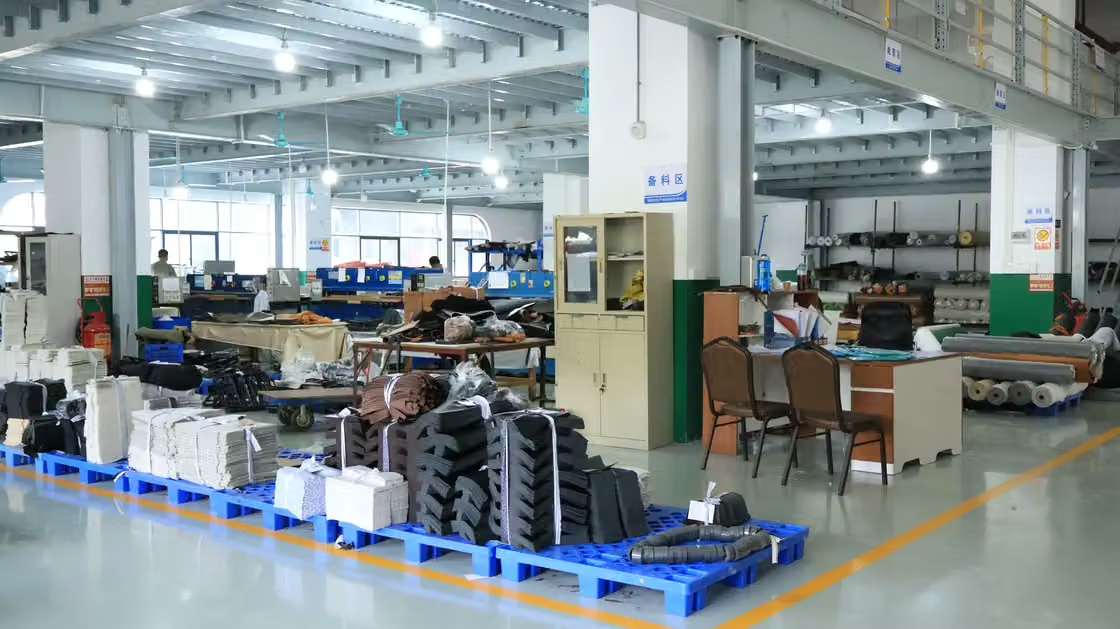
Bulk handbag production is the coordinated manufacture of an order using an approved design and agreed specifications. It includes preparing components, organizing manufacturing, reviewing consistency and packing the finished bags for dispatch.
Before starting, confirm the approved sample version, current tech pack and bill of materials (BOM). Record any approved differences, including logo position, lining, hardware finish or packaging.

| Reference | Confirm before release | Production use |
|---|---|---|
| Approved sample | Sample version and approved changes | Construction, proportions and finish reference |
| Tech pack & BOM | Measurements, materials and component specifications | Working instructions and sourcing reference |
| Order & packing brief | Quantities, colorways, labels and carton requirements | Allocation, labeling and shipment preparation |
Need to resolve the design first? See handbag product development and sample development & approval.
03 Ready before the line starts
Material readiness and order details shape the production plan. Confirm what is approved, what must be sourced and which points still need a buyer decision.
| Item | Reference to confirm | Readiness check |
|---|---|---|
| Styles & colorways | Style codes, SKUs and quantities by color | Order allocation agreed |
| Body, lining & reinforcement | Approved material and construction specifications | Availability and component minimums reviewed |
| Zippers, hardware & logos | Size, finish, function and artwork version | Sourcing or tooling requirements reviewed |
| Production schedule | Material readiness and required dispatch window | Production slot discussed |

Review handbag materials, custom hardware, color customization and lining options as part of the same order brief. Material or component minimums may affect the final quantity plan.
04 The manufacturing stages
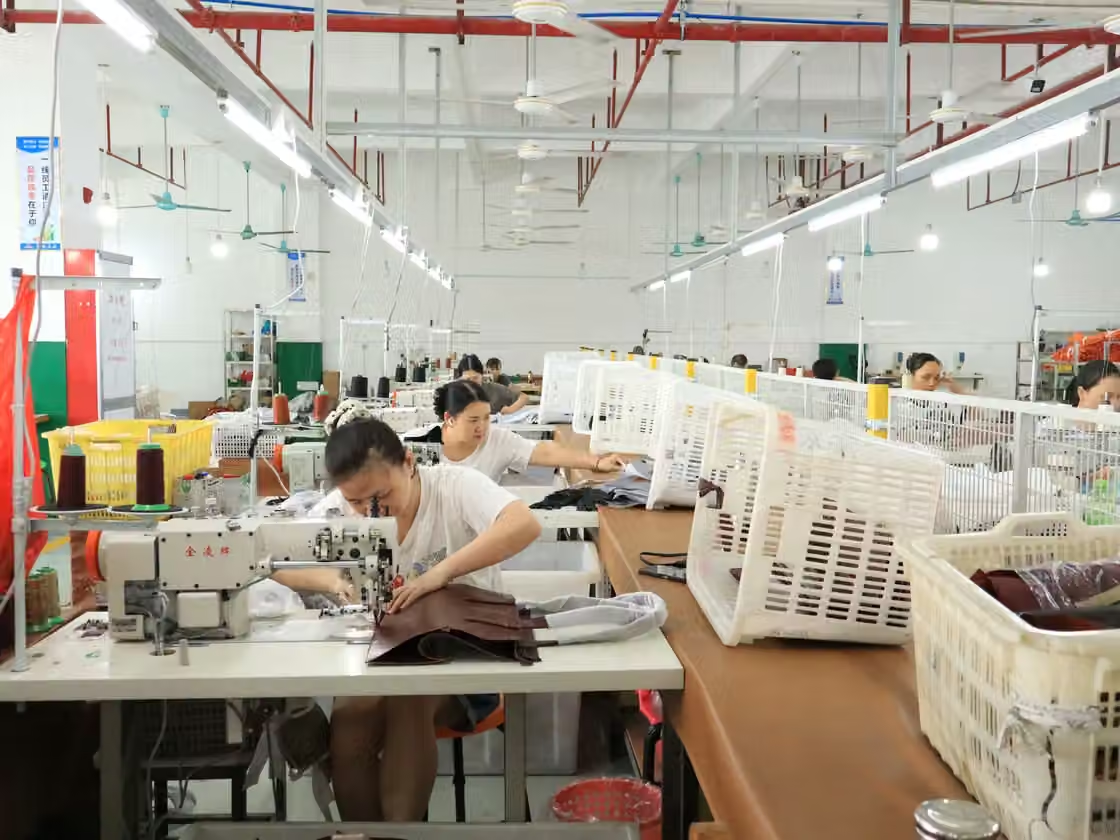
The manufacturing sequence depends on the bag’s material and construction. The stages below show the main decisions carried from the approved sample into handbag mass production.
STEP 01
Prepare panels and supporting pieces against the approved pattern, with attention to direction, print placement and material use.
STEP 02
Where the leather construction requires it, prepare edges and thickness for folding or joining. Other materials follow their own preparation method.
STEP 03
Prepare handles, straps, pockets, lining and closures to the agreed construction and measurements.
STEP 04
Join components in the planned sequence, checking seam appearance, alignment and the bag’s overall shape.
STEP 05
Apply the specified edge treatment and fit the approved hardware and logo details at the appropriate stage.
STEP 06
Remove loose threads and handling marks, then review the finished bag before the agreed packing checks.
Logo application and hardware fitting are coordinated with construction; the exact stage varies by design. Explore logo customization and bag hardware options.
05 Keep the reference visible
Consistency needs checkpoints throughout production. Agree the points that matter for your bag, rather than leaving every decision until the finished order is packed.
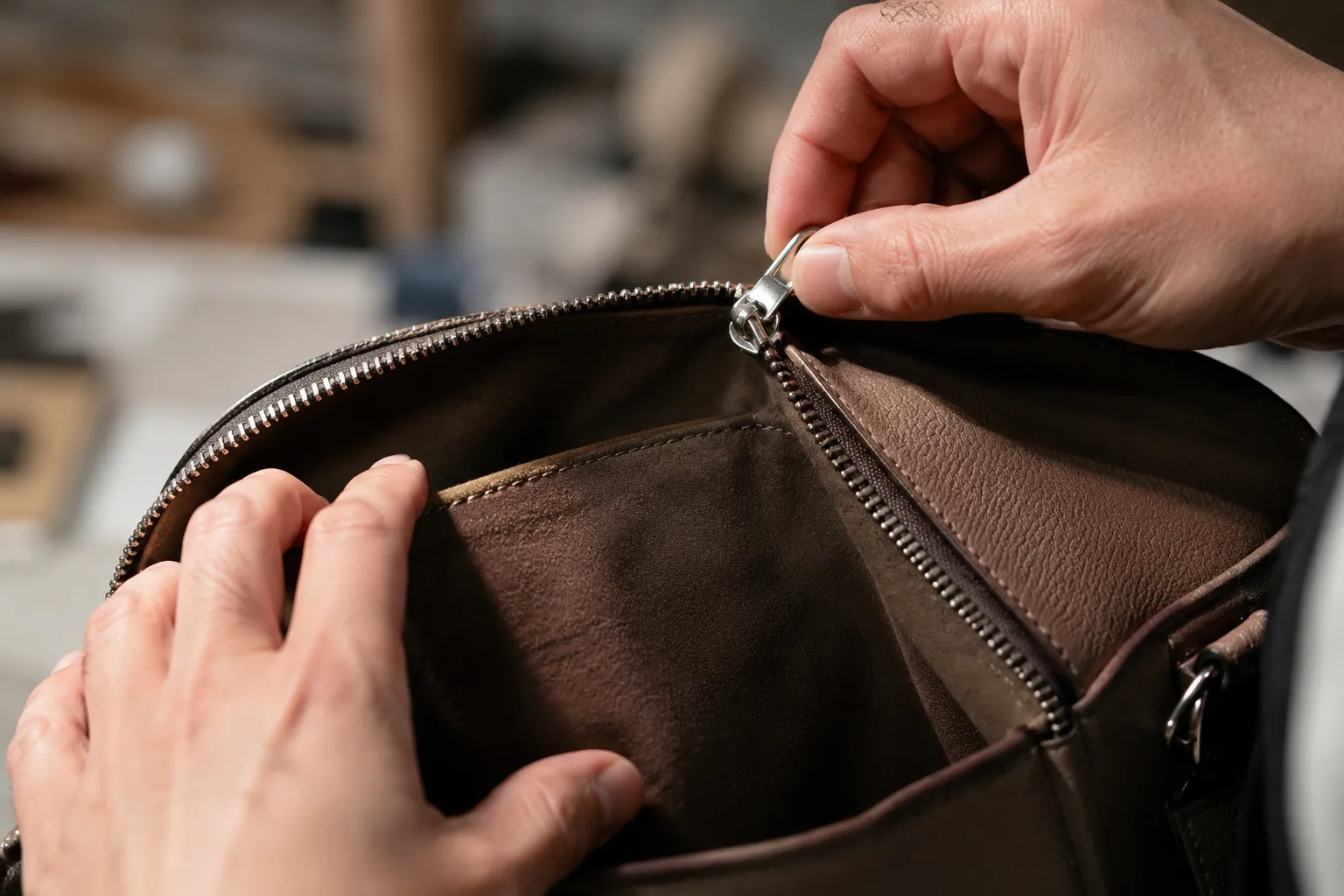
Inspection scope, sampling method, acceptance criteria and any AQL requirement should be agreed for your project. A discrepancy may need correction or buyer review before the affected production continues.
See handbag quality control for the dedicated inspection topic.
06 A practical order plan
A realistic production plan brings the approved specification, material readiness and dispatch target together. Confirm these details before relying on a delivery date.
As a planning reference, bulk production is approximately 45 days after sample approval and receipt of the production deposit. Your confirmed schedule depends on materials, order size, hardware and packing requirements.
Share the quantity for each style and colorway. The order plan needs to account for material, hardware and packaging minimums as well as production allocation.
Materials, construction complexity, custom hardware, logo treatment, order quantity and packaging influence the quotation. Changes to the approved specification may need a revised cost and schedule.
| Planning point | Information to share | What may affect the plan |
|---|---|---|
| Required dispatch | Target ship-ready date and any staged release | Material readiness, production allocation and packing |
| Order quantities | Units by style, colorway and SKU | Component minimums and the number of variations |
| Quotation scope | Approved sample, specifications and packing brief | Construction, custom components and approved changes |
Production completion and shipment arrival are different dates. Allow separately for inspection arrangements, dispatch, transit and destination handling. Read the manufacturing FAQ or the OEM/ODM manufacturing overview.
07 Pack against the order brief
Packing instructions belong in the production handover. They help connect the finished bags with your warehouse, retailer or distribution requirements.

Confirm protective packing, label artwork, SKU and barcode information, units per carton, mixed-carton rules and carton marks. Review the final artwork version before labels or printed packaging are produced.
Before dispatch, reconcile the order quantities and packing list. Record the actual carton count, dimensions and weights for shipment coordination; estimates should be replaced with final packing data.
| Requirement | Buyer input | Final check |
|---|---|---|
| Unit packing | Protection, dust bag or other agreed packaging | Correct packing for the bag and finish |
| Labels & barcodes | Approved artwork and SKU/colorway mapping | Version, placement and legibility |
| Carton allocation | Units per carton and any mixing rules | Quantity, assortment and carton marks |
| Shipment information | Consignee and dispatch instructions | Packing list, carton count and actual weights |
Plan custom handbag packaging alongside the agreed finished-goods inspection requirements.
08 Build on the approved order
A repeat order can build on the previous specifications, but the next production run still needs its own confirmation. Review what stays the same and what has changed.
Use the retained sample and agreed material, construction, hardware and packing records to identify the version you want to repeat.
Check material supply, current shades and finishes, order quantities and production allocation before confirming the new schedule.
New colors, hardware finishes, labels or structural changes may require fresh approval or another sample before bulk production.
Share the earlier order reference and your next quantity by colorway. If you are refreshing a collection, review new colorways and whether another sample approval is needed.
09 Before your order moves ahead
A few production decisions are easier to resolve before materials are purchased or the order enters the workshop.
Tell us the change as early as possible. We need to review whether components have been ordered, cut or assembled and assess the effect on cost, quantity and timing. Any revised specification and commercial impact should be approved before the change proceeds.
Share the required quantities and dispatch windows before confirming the order. Separate releases need an agreed plan for packing, inspection, storage and shipment coordination, including any additional costs.
Yes—tell us which stages you need to follow. We can agree suitable update points and the information to share for your order. Photos support communication; they do not replace the agreed inspection and acceptance process.
For broader questions about development and manufacturing, visit our handbag manufacturing FAQ.
10 Talk through your next production run
I’m Tanya, Handbag Product Manager at Veggance. I can help you bring the approved sample, order quantities and production requirements into one clear brief.
Send me the details you already have. I’ll help identify the material, construction, packing and scheduling points that need confirmation before your order moves ahead.
An incomplete brief is welcome—we can start with the information available.

 Optimized by Seraphinite Accelerator