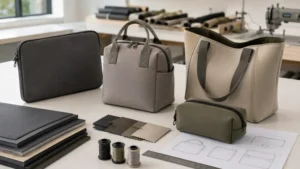
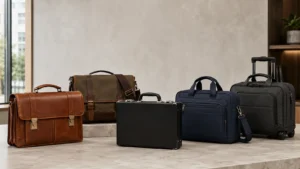
A tote bag and a satchel bag can serve similar purposes, but they usually approach everyday carrying differently.
A tote commonly combines two handles with a broad opening and a roomy main compartment.
A satchel often has a more defined body, shorter top handles or a top handle, and an optional shoulder or crossbody strap.
These are common design directions rather than strict rules: totes can be structured and zippered, while modern satchels can have soft bodies and zipper openings.
If you are choosing a style for a handbag collection, the useful question is how the design should work for your customer. What will they carry? How will they wear the bag? Which materials, details and price point fit your brand?
This guide compares tote bags and satchels through their shapes, materials, carrying options and development requirements, helping you turn a style preference into a clearer product brief.
Tote Bags and Satchels at a Glance
The table below compares common features. Individual designs can combine elements from both categories.
| Feature | Tote bag | Satchel |
|---|---|---|
| Typical silhouette | A broad body with paired handles; rectangular and trapezoidal shapes are common | A defined handbag body; flap, dome, rounded and other fashion silhouettes are possible |
| Opening | Often wide; can be open, zippered or secured with a snap | Can use a flap, zipper or another specified closure |
| Carrying options | Commonly carried by hand or on the shoulder | May combine top handles with a shoulder or crossbody strap |
| Interior | Often built around one main space; organizers and laptop sleeves can be added | May have one main space, divided sections or a central zip compartment |
| Capacity | Roomy formats are common, but mini totes also exist | Compact and medium formats are common, with larger work styles also possible |
| Structure | Can be soft, semi-structured or firm | Often has a defined shape, but softer versions are also available |
| Best starting point | A collection centered on accessible storage and everyday versatility | A collection centered on a particular silhouette and a coordinated handle or strap system |
| Production cost | Depends on materials, size, construction, finishing and quantity | Depends on the same factors; the category alone does not determine cost |
For a brand, these differences are starting points for development. The finished specification matters more than the bag name.
Understanding Tote and Satchel Silhouettes
What makes a tote recognizable?
A tote is commonly recognized by its paired handles and relatively broad opening. That format makes it easy to develop around larger everyday items, such as a notebook, a cosmetic pouch or a change of clothing.
A simple canvas tote may have an open top and minimal lining. A fashion tote might use a reinforced base, a full lining, metal hardware, internal pockets and a top zipper. Both can belong to the same category while offering very different experiences.
The distinction between a soft tote and a structured tote is especially useful. A soft body allows a more relaxed appearance, while reinforcement can help create a defined silhouette. The right choice depends on the collection’s intended look and function.
Explore Veggance’s custom tote bags to see development directions for different materials, structures and applications.
How does a traditional satchel differ from a modern satchel?
The traditional satchel is associated with a flap-covered opening and a long carrying strap. It provides a useful reference for understanding the category, but modern fashion satchels extend beyond that format.
A contemporary satchel may have paired top handles, a rounded zipper opening, a detachable strap or a softer body. A flap is one design option rather than a requirement.
For example, Coach’s Rowan Satchel combines two top handles, a removable strap and a zipper opening. Kate Spade’s Bleecker Large Zip-top Tote demonstrates that a tote can also have a secure top zipper.
When discussing a design with a manufacturer, a reference image and clear specifications help resolve any uncertainty about the category name.
Shape, Closures, Handles and Interior Layouts
Shape and usable space
External dimensions do not tell you everything about capacity. A bag’s curved top, tapered sides, lining and internal dividers can affect the space available for its contents.
For either style, define the actual items the customer needs to carry. If a laptop is part of the brief, specify the device dimensions and whether it needs a protective sleeve. The opening must also allow the device to enter comfortably.
Check fit with the prototype. A bag can look large enough from the outside while its opening or interior construction limits access.
Closures and access
An open top provides direct access, while a zipper creates a more enclosed main compartment. A flap can introduce a signature shape or a distinctive lock, but it also changes the opening sequence.
The practical comparison is therefore between specific closures. A zippered tote and a zippered satchel may offer similar containment, while an open tote and a flap satchel will feel different to use.
Review whether the closure opens smoothly, whether the handles obstruct access and whether the bag remains convenient when filled.
Handles and straps
For a shoulder tote, handle drop, width and attachment position affect how the bag sits under the arm. For a handheld satchel, the grip and clearance around the handles need attention.
A removable strap adds another carrying option, but its length, width, adjustment range and attachment points must work with the body. Adding a strap does not automatically make a design comfortable.
Evaluate the sample with representative contents and the intended carrying methods. The same bag may feel balanced in the hand and awkward across the body.
Interior organization
A broad main compartment can suit customers who use their own pouches. A divided interior can suit customers who want built-in organization.
Plan pockets around real items rather than adding them only to lengthen the feature list. Consider how a phone pocket, zip pocket or central divider affects access and remaining space.
Material Choices for Both Bag Styles
Material selection should support the intended shape, hand feel and target cost. Both tote bags and satchels can be developed in different materials.
Genuine leather
For leather designs, review thickness, flexibility, surface finish and panel consistency. A crisp silhouette may need a different material and reinforcement combination from a relaxed body.
Also consider how handles, folds and edges will be finished. Selecting leather is only one part of creating the final appearance; the construction and finishing must work with that selection.
PU and microfiber leather alternatives
PU and microfiber options can be considered for either style. Compare the selected grade’s texture, backing, flexibility and suitability for the planned construction.
During sampling, review how the material behaves around curves, seams and folded edges. A swatch can communicate color and hand feel, but the prototype shows how it performs as a finished bag.
Canvas and nylon
Textiles provide additional directions for casual, everyday or travel collections. Canvas and nylon can be combined with selected trims, lining and reinforcement.
Confirm the fabric specification and required finish. If resistance to moisture matters, define the expected performance and evaluate the relevant material and finished construction rather than relying on the fabric name.
Recycled and plant-based options
Selected recycled or plant-based materials may fit a brand’s material strategy. Review their composition, supporting documentation, availability and compatibility with the design.
The tote or satchel category alone does not establish environmental performance. Any product claim should reflect the selected components and the evidence available for them.
Choosing Between a Tote and a Satchel for Work, Everyday Use and Travel
Work and commuting
Start with the daily carrying list: laptop, documents, charger, bottle and personal items.
A work tote can be developed around a broad opening, a device sleeve and comfortable shoulder handles. A work satchel can offer another silhouette with top handles and a separate carrying strap.
If device storage is essential, prioritize interior clearance, opening access, base support and the loaded carrying experience. Either category can work when those details are resolved.
Everyday use
For daily collections, consider how much the customer carries and how often they need to reach inside.
A roomy tote may suit customers who move between errands and other activities. A smaller satchel may suit a brief built around selected essentials and a more compact silhouette.
Avoid treating all totes as large or all satchels as small. Establish the intended contents first, then develop the proportions.
Travel
Define the travel situation. A bag used for a long journey has different requirements from one used for sightseeing.
For either style, consider a closure that contains the contents, useful document storage and comfortable carrying options. Review empty bag weight alongside the expected packed contents.
If the product is intended to meet a particular travel size requirement, put that requirement into the brief and confirm the finished dimensions.
What Affects the Cost of a Custom Tote or Satchel?
There is no reliable rule that a tote is always cheaper or a satchel is always more expensive. Compare specifications under similar conditions.
A large leather tote may use more body material than a compact satchel. A smaller satchel may require more assembly around curved panels, several compartments or decorative hardware. These are reasons to review the design, rather than assign a price from the category.
| Cost factor | What to compare |
|---|---|
| Body material | Selected grade, thickness, finish and consumption |
| Size and pattern | Panel dimensions, number of pieces and cutting layout |
| Reinforcement | Base support, backing, interlining and handle attachment construction |
| Interior | Lining, pocket count, dividers, sleeves and their assembly |
| Hardware | Closures, hooks, rings, feet, logo parts and any custom tooling |
| Finishing | Edge treatment, seam details and other finishing operations |
| Branding and packaging | Logo method, labels, dust bags, tags and boxes |
| Order structure | Quantity per style and color, component minimums and repeat-order plans |
For a useful quotation comparison, give suppliers the same core brief: reference images, dimensions, materials, lining, closure, hardware, branding, packaging and quantity breakdown.
If the quotation exceeds the target, identify which details matter most to the customer. Possible adjustments might include simplifying the interior, changing a hardware specification or reviewing the material grade. Each change should be assessed against its effect on appearance and function.
Selecting the Right Style for a Private Label Collection
A collection decision should connect the silhouette to the customer, the retail position and the development budget.
Define the customer and the product’s role
Describe what the customer needs the bag to do. “A work bag that carries a specified laptop and a bottle” is more useful than “a stylish large handbag.”
Then decide what role it has in the range. Is it an everyday core style, a compact companion or a seasonal design? This helps determine which features deserve attention.
Build a coordinated range
A brand can develop both a tote and a satchel around a shared design language. Coordinated materials, colors, logo treatment, lining and hardware finishes can connect them visually.
Their interiors and carrying systems should still serve their individual purposes. Matching the collection does not require making both bags function identically.
Review a clear brief before sampling
Include:
- Reference images or design drawings.
- Finished dimensions and intended contents.
- Material, color and surface finish.
- Handle drop and any strap requirements.
- Opening, closure and interior layout.
- Hardware and logo details.
- Estimated quantity by style and color.
- Target price, packaging and launch timing.
The first sample should help answer the unresolved questions. Review it empty and filled, inspect opening access, and try the intended carrying methods.
Before bulk production, record the approved dimensions, materials, hardware, branding and workmanship details. This gives the production team a defined reference.
Veggance develops custom satchel bags and tote designs with options for materials, handles, straps, lining and branding. A reference image or tech pack can provide the starting point for a focused development discussion.
Frequently Asked Questions
Can a tote bag have a zipper?
Yes. A tote can have an open top, zipper, magnetic closure or another opening design. Select the closure around the intended use and evaluate access with the sample.
Does every satchel have a flap?
No. A flap is common in traditional satchels, while modern fashion satchels can use zipper openings and other closures. Clarify the desired silhouette with reference images.
Is a satchel the same as a crossbody bag?
The terms describe different aspects of a design. Satchel refers to a bag category, while crossbody describes a carrying method. A satchel fitted with an appropriate strap can be worn across the body, but some designs are intended primarily for handheld carry.
Which is better for carrying a laptop?
Choose the design that fits the specific device, provides the required support and remains comfortable when loaded. Both a tote and a larger satchel can be developed for this purpose. Check interior dimensions and opening clearance with a prototype.
Can totes and satchels use the same material?
Yes. A collection can use the same selected material across both styles. Review reinforcement, lining and edge construction separately so the material supports each shape.
Which style costs less to manufacture?
The answer depends on the complete specification and order structure. Compare materials, consumption, construction, hardware and finishing before deciding. A simple design may require fewer operations, but size and material selection can change the result.
Can one private label collection include both?
Yes. A tote and satchel can share colors, materials and signature details while offering different sizes or carrying options. Define a clear purpose for each style so the range gives customers a meaningful choice.
Develop Your Tote or Satchel Collection with Veggance
Share your reference images, preferred dimensions, materials, estimated quantity and target price. Veggance can review the design direction and customization requirements before sampling.
Explore our custom tote bag options and custom satchel bag options, or contact Veggance to discuss your next collection.