Nylon appears in everything from tights and sportswear to backpacks, carpets, ropes and mechanical parts. It is lightweight, tough and versatile-but what exactly is nylon, and is it a plastic, a fiber or a fabric?
Nylon is a family of synthetic polyamide polymers. Manufacturers can melt nylon and spin it into fibers for textiles, or mold it into solid products such as gears, cable ties and machine components.
Nylon is synthetic rather than natural. Most conventional nylon is made using chemicals derived from fossil resources, although recycled and partly bio-based alternatives are also available.
For people choosing vegan clothing or accessories, nylon introduces an important distinction: a material can be animal-free without necessarily being environmentally low-impact. Understanding how nylon is made and used makes it easier to evaluate the whole product instead of relying on a single label.
Nylon at a Glance
| Question | Short answer |
|---|---|
| What is nylon? | A family of synthetic polyamide polymers |
| Is nylon natural or synthetic? | Synthetic |
| Is nylon plastic? | Yes. Nylon is commonly classified as a thermoplastic polyamide |
| Is nylon a fiber? | It can be melted and spun into manufactured fibers |
| Is nylon a fabric? | Nylon fiber can be woven or knitted to make fabric |
| Is nylon vegan? | The nylon material itself is generally animal-free, but the complete product may contain non-vegan components |
| What are the most common types? | Nylon 6 and nylon 6,6 |
| What are nylon’s main strengths? | Toughness, abrasion resistance, elasticity and relatively low weight |
| Is nylon waterproof? | Not automatically; waterproof performance depends on fabric construction, coatings, membranes and seams |
| Is nylon biodegradable? | Conventional nylon is not readily biodegradable |
| What is nylon used for? | Clothing, bags, carpets, ropes, tire cord, fishing line and engineering components |
What Does “Nylon” Mean?
The word nylon does not refer to one single substance. It is the general name for a family of polymers known as polyamides.
A polymer is a large molecule made from many smaller repeating units. In nylon, these repeating units are connected by chemical links called amide bonds. Different starting chemicals and molecular arrangements produce different types of nylon with different properties.
In everyday language, “nylon” may describe several stages of the same material:
- The raw polyamide polymer
- Pellets or chips used in manufacturing
- Filaments spun from molten polymer
- Yarn made from those filaments
- Woven or knitted nylon fabric
- Solid plastic parts molded from nylon resin
This is why nylon can accurately be described as a polymer, plastic, manufactured fiber or textile material. The correct term depends on the form in which it is being used.
What Is Nylon Made Of?
Most conventional nylon is made from chemical feedstocks associated with the petrochemical industry. The specific ingredients depend on the type of nylon being produced.
The two most common types are Nylon 6 and Nylon 6,6.
What Is Nylon 6 Made From?
Nylon 6 is usually made from caprolactam. During production, caprolactam molecules open and join together to form long polyamide chains.
The resulting polymer can be converted into pellets, melted and spun into textile filaments. Nylon 6 is widely used in clothing, carpets, industrial yarns, films and molded components.
What Is Nylon 6,6 Made From?
Nylon 6,6 is commonly produced from two main substances:
- Hexamethylenediamine
- Adipic acid
These substances react to form long polymer chains. Water is produced as a by-product of the polymerization reaction.
Nylon 6,6 generally has a higher melting point than Nylon 6 and is frequently used when greater heat resistance or dimensional stability is required. Actual performance still depends on the polymer grade, additives, yarn design, fabric construction and finishing process.
Is Nylon Made From Another Fiber?
No. Nylon is not made from cotton, wool, silk or another existing fiber.
Nylon is itself a manufactured fiber. Chemical ingredients are first converted into a polyamide polymer, and the polymer is then spun into filaments.
This makes the query “what fibre is nylon made from?” slightly misleading. A more accurate answer is:
Nylon fiber is made by melting a synthetic polyamide polymer and extruding it through tiny holes to form continuous filaments.
Is Nylon Natural or Synthetic?
Nylon is synthetic.
Natural fibers such as cotton, linen, wool and silk are obtained from plants or animals. Nylon is manufactured through controlled chemical reactions and industrial spinning processes.
Even when part of a nylon’s feedstock comes from a renewable biological source, the finished polymer is still manufactured. “Bio-based” describes the origin of some or all of the raw material; it does not turn nylon into a natural fiber.
Bio-based also does not automatically mean biodegradable. These are separate characteristics that should be verified independently.
Is Nylon a Plastic, Fiber or Fabric?
Nylon can be all three, depending on where it is in the production process.
Chemical ingredients
        ↓
Nylon polyamide polymer
        ↓
Pellets or chips
        ├── Melt spinning → Filament → Yarn → Fabric
        └── Molding → Solid plastic components

At the chemical level, nylon is a polymer. Because many nylon grades soften when heated and can be reshaped, they are also classified as thermoplastics.
When molten nylon is pushed through a spinneret-a plate containing very small holes-it forms fine filaments. Those filaments can be processed into yarn and then woven or knitted into fabric.
The same basic family of polymers can also be molded into hard-wearing objects such as:
- Gears
- Bearings
- Fasteners
- Cable ties
- Electrical components
- Automotive parts
So, “nylon is a fabric” is only partly correct. Nylon becomes a textile fabric after the polymer has been spun into fibers and those fibers have been made into a textile structure.
A Brief History of Nylon
Nylon was developed during the 1930s by a research team led by chemist Wallace Carothers at DuPont.
Early commercial applications included toothbrush bristles. Nylon stockings later made the material widely recognized as a textile fiber. During the Second World War, nylon was also used in products such as parachutes, ropes and tire cord.
Its combination of strength, low weight and scalable manufacturing helped nylon expand far beyond clothing. Today, polyamides are used across the textile, automotive, electrical, medical and industrial sectors.
How Is Nylon Manufactured?
The exact process depends on the type and intended application, but nylon fiber is generally made through the following stages.
1. Preparing the Raw Materials
Manufacturers produce and purify the chemical ingredients required for the selected type of nylon. Nylon 6 and Nylon 6,6 use different starting materials and polymerization processes.
2. Creating the Polymer
The ingredients react to form long polyamide chains.
Nylon 6 is commonly produced through ring-opening polymerization of caprolactam. Nylon 6,6 is commonly produced through a condensation reaction involving a diamine and a dicarboxylic acid.
3. Forming Nylon Chips or Pellets
The polymer may be cooled, cut into chips and dried. Controlling moisture is important because excess water can affect the polymer during later melt processing.
4. Spinning the Fiber
The nylon is melted and forced through a spinneret. Each opening produces a fine, continuous filament.
The filaments are cooled and solidified. They are then drawn, which aligns the polymer molecules and helps improve the strength and consistency of the fiber.
5. Turning Fiber Into Fabric
The filaments can be combined, twisted or textured to create different yarn characteristics. The yarn may then be:
- Woven
- Knitted
- Dyed
- Heat-set
- Printed
- Coated
- Laminated
- Treated with a water-repellent finish
The final performance depends on all these stages-not simply on the word “nylon” printed on a label.
Common Types of Nylon
Nylon can be classified by polymer chemistry, fiber structure, fabric construction and surface treatment. These categories should not be confused with one another.
Nylon Types by Polymer Chemistry
| Nylon type | General characteristics | Common applications |
|---|---|---|
| Nylon 6 | Good toughness, dyeability and processability | Clothing, carpets, films, industrial yarns and molded parts |
| Nylon 6,6 | Generally higher melting point and good dimensional stability | Technical textiles, tire cord, industrial parts and durable fabrics |
| Nylon 11 | Often associated with partly or substantially bio-based feedstocks, including castor-oil-derived routes | Tubing, automotive components and specialty applications |
| Nylon 12 | Relatively low moisture absorption compared with some other polyamides | Technical components, tubing and specialty molded parts |
| Recycled nylon | Nylon recovered from pre-consumer or post-consumer material | Clothing, swimwear, accessories, carpets and industrial products |
Recycled nylon is not a separate polymer family. For example, recycled Nylon 6 is still Nylon 6; “recycled” describes its material source and recovery route.
Nylon Types by Fabric Construction
Textile names describe how the yarn is woven, knitted or reinforced. They do not necessarily identify the polymer chemistry.
Common examples include:
- Nylon taffeta
- Nylon Oxford
- Ripstop nylon
- Ballistic nylon
- Nylon tricot
- Nylon mesh
- Packcloth nylon
Ripstop, for example, is a reinforcement pattern designed to help limit the spread of a tear. It is not a distinct type of nylon polymer.
Similarly, ballistic nylon describes a heavy woven textile originally developed for protective applications. Its actual performance depends on yarn, weave, weight, finishing and construction.
Nylon Types by Finish or Coating
A nylon base fabric may be combined with:
- Polyurethane, or PU, coatings
- Thermoplastic polyurethane, or TPU, films
- Silicone coatings
- Durable water-repellent treatments
- Acrylic coatings
- Printed or embossed finishes
These treatments can significantly change the fabric’s water resistance, appearance, flexibility, weight and end-of-life options.
What Does Nylon Look and Feel Like?
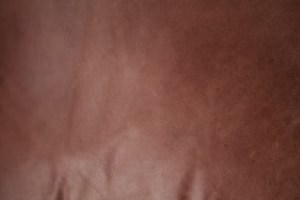
Nylon does not have one fixed appearance.
Depending on its filament, yarn, fabric construction and finish, nylon may be:
- Smooth or textured
- Soft or crisp
- Matte or shiny
- Lightweight or heavy
- Sheer or opaque
- Flexible or relatively rigid
Fine nylon filaments can produce smooth, lightweight fabrics used in hosiery and sportswear. Coarser yarns and dense woven structures can produce robust materials for backpacks, luggage and industrial equipment.
A photograph alone is usually not enough to identify nylon. Polyester, nylon and other synthetic textiles can look very similar, especially after coating or finishing. Reliable identification normally requires a label, material specification or laboratory analysis.
Characteristics and Properties of Nylon
Nylon became widely used because it offers a valuable combination of strength, toughness and processability.
However, there is no single performance profile for every nylon product. Fiber thickness, yarn design, weave, additives, coating and manufacturing quality all matter.
| Property | What it means in practice | Important qualification |
|---|---|---|
| Strength | Nylon can provide a good strength-to-weight ratio | Actual strength depends on polymer grade, yarn and fabric structure |
| Abrasion resistance | It can withstand repeated rubbing in many applications | A light nylon fabric may still wear faster than a heavier construction |
| Toughness | Nylon can absorb energy without breaking immediately | Performance changes with temperature, moisture and formulation |
| Elasticity | Many nylon fibers bend and recover well | Nylon is not automatically a high-stretch fabric |
| Weight | Strong textiles can be made at relatively low weights | Coatings and dense constructions add weight |
| Moisture absorption | Nylon absorbs more moisture than many polyester fibers | It may still dry faster than many natural fibers |
| Dyeability | Nylon can often be dyed in rich colors | Colorfastness depends on the dye system and finishing |
| Heat sensitivity | Nylon is thermoplastic and can soften or melt | High heat from irons, dryers or open flames can damage it |
| UV resistance | Stabilized grades can perform well outdoors | Unprotected nylon may degrade with prolonged UV exposure |
| Chemical resistance | Nylon resists many oils and chemicals | Strong acids and some chemicals can attack it |
| Mildew and insect resistance | Synthetic nylon does not provide the same food source as wool or cotton | Dirt and residues on the fabric can still support odor or surface growth |
Is Nylon Strong?
Nylon is generally considered strong and tough for its weight. It is especially valued for its resistance to abrasion and repeated flexing.
But “nylon is strong” should not be interpreted as “every nylon fabric is stronger than every polyester or cotton fabric.”
A fabric’s strength also depends on:
- Yarn denier
- Filament quality
- Weave or knit
- Fabric weight
- Reinforcement pattern
- Coating
- Seam construction
- Aging and UV exposure
Denier describes yarn linear density. A higher denier usually indicates a heavier yarn, but it does not by itself prove that the finished fabric has greater tear strength, abrasion resistance or waterproofness.
Is Nylon Flexible?
Many nylon products are flexible, but flexibility depends on the form of the material.
Fine nylon fiber can create soft, draping fabric. Molded engineering nylon may be rigid. Additives, moisture, temperature, coating thickness and product geometry can all affect flexibility.
Flexibility is also different from stretch. A nylon fabric may bend easily without stretching very far unless its construction or fiber blend has been designed for elasticity.
Is Nylon Waterproof?
Nylon is not automatically waterproof.
An untreated woven nylon fabric contains gaps between its yarns. Water can pass through these openings even if the individual fibers do not immediately soak up large amounts of water.
Waterproof or highly water-resistant nylon products generally rely on one or more of the following:
- A dense fabric construction
- A PU, TPU or silicone coating
- A waterproof membrane
- Taped or welded seams
- A water-repellent surface treatment
- A product design that prevents water entry
A durable water-repellent finish may cause droplets to bead on the surface, but water repellency is not the same as waterproofness.
For products that make a waterproof claim, the material and completed product should be assessed using an appropriate test method and stated test conditions.
What Is Nylon Used For?
Nylon is used in both textile and non-textile products.
Clothing and Fashion
Examples include:
- Hosiery and tights
- Swimwear
- Sportswear
- Windbreakers
- Lingerie
- Socks
- Rainwear shells
- Stretch garments blended with elastane
- Linings
- Straps and webbing
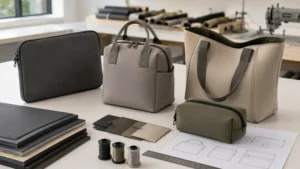
Bags and Accessories
Nylon may be used in:
- Backpacks
- Crossbody bags
- Totes
- Travel bags
- Luggage
- Cosmetic bags
- Wallet linings
- Packing organizers
- Belts and webbing
- Zipper tape
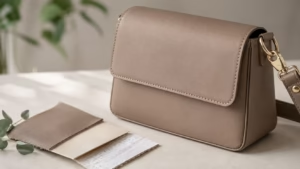
The word “nylon” alone does not reveal whether a bag is lightweight, waterproof, abrasion-resistant or suitable for heavy loads. Those qualities depend on the complete material and product construction.
Home and Interior Products
Common examples include:
- Carpets
- Rugs
- Upholstery
- Curtains
- Mattress components
- Cleaning brushes
Outdoor and Sports Equipment
Nylon is widely used in:
- Tents
- Hammocks
- Ropes
- Climbing equipment
- Fishing line
- Parachutes
- Kites
- Outdoor apparel
- Equipment straps
Safety-critical applications require specialized design, testing and certification. A general-purpose nylon fabric should never be assumed to be suitable for climbing, fall protection or load-bearing use.
Industrial and Engineering Products
Nylon is also used in:
- Tire cord
- Conveyor components
- Gears
- Bearings
- Bushings
- Cable ties
- Electrical connectors
- Automotive parts
- Tubing
- Machine components
In these applications, nylon is usually selected as an engineering plastic rather than as a fabric.
Examples of Nylon Fabrics and Clothes
Products commonly described as nylon clothing include:
- Sheer nylon hosiery
- Lightweight nylon windbreakers
- Nylon-elastane leggings
- Nylon swimwear
- Nylon-blend sports bras
- Ripstop nylon outdoor trousers
- Nylon rain shells
- Nylon jacket linings
- Technical socks containing nylon
Most of these products are not made from nylon alone. Elastane may be added for stretch, cotton for softness or polyester for moisture and cost considerations.
Labels should be checked carefully because similar-looking garments may use very different fiber blends.
Advantages of Nylon
Nylon offers several practical benefits.
1. Good Abrasion Resistance
Appropriately engineered nylon can withstand repeated rubbing, making it useful for bags, carpets, workwear and technical equipment.
2. Strong for Its Weight
Nylon fiber can provide useful strength without requiring an extremely heavy textile.
3. Flexible and Resilient
Many nylon fibers tolerate repeated bending and can recover well after deformation.
4. Versatile Appearance
Manufacturers can produce nylon in fine, smooth filaments or heavier, textured yarns. It can be dyed, printed, coated and laminated.
5. Resistance to Moths and Mildew
Nylon is not a protein or cellulose fiber, so it is not attacked in the same way as wool or some plant-based textiles. The product still needs to be kept clean and dry.
6. Long Service Life in Suitable Applications
A durable nylon product may remain usable for many years. Longevity can reduce how frequently an item needs to be replaced, provided the product is designed, used and cared for appropriately.
Disadvantages of Nylon
Nylon also has significant limitations.
1. Most Conventional Nylon Uses Fossil-Derived Feedstocks
The majority of conventional nylon is produced using raw materials associated with oil or natural gas supply chains.
2. Production Can Be Energy- and Emissions-Intensive
The environmental footprint varies by nylon type, manufacturing technology, energy source and emissions controls.
Adipic acid production used in conventional Nylon 6,6 supply chains can release nitrous oxide, a powerful greenhouse gas, when effective abatement systems are not used.
3. Nylon Can Shed Synthetic Microfibers
Like other synthetic textiles, nylon fabric may release small fibers during manufacturing, use and washing. Product construction, surface treatment, abrasion and care practices influence shedding.
4. It Is Not Readily Biodegradable
Conventional nylon can persist for a long time after disposal. This makes collection, reuse and recycling important, although textile-to-textile recycling remains limited in many locations.
5. Recycling Can Be Difficult
Blended fibers, coatings, prints, elastane, adhesives, trims and complex product construction can make nylon difficult to separate and recycle.
6. Heat Can Damage It
Nylon can melt, glaze, deform or shrink when exposed to excessive heat. Care instructions should be followed carefully.
7. UV and Moisture Affect Performance
Some nylon products lose strength after prolonged UV exposure. Nylon also absorbs more moisture than polyester, which may affect weight, dimensions and mechanical properties.
Is Nylon Vegan?
Nylon itself is generally considered vegan because it is a synthetic polyamide and is not obtained from animals.
However, a nylon garment, shoe or bag is not automatically entirely vegan. The completed product may also contain:
- Leather trims
- Wool felt
- Silk
- Down or feathers
- Shell buttons
- Animal-derived glues
- Beeswax treatments
- Casein-based components
- Dyes, pigments or processing aids with unclear origins
Manufacturing aids may not always appear on a fiber-content label. If full vegan verification is important, look for detailed material disclosure or a credible product-level vegan certification.
The key distinction is:
Nylon can be animal-free, but “contains nylon” is not proof that the entire product is vegan.
Is Nylon Sustainable?
Nylon should not be described as sustainable without context.
Conventional nylon has several environmental challenges:
- Dependence on mostly fossil-derived raw materials
- Energy-intensive chemical production
- Greenhouse gas emissions
- Synthetic microfiber shedding
- Limited biodegradability
- Difficult recycling of blended or coated products
At the same time, nylon’s durability can support a longer product life. A product that is used frequently and kept for many years may have a different overall impact from one that is quickly discarded.
Material impact therefore depends on more than fiber name. Relevant factors include:
- Virgin or recycled feedstock
- Manufacturing energy
- Emissions controls
- Dyeing and finishing
- Fabric durability
- Product design
- Repairability
- Frequency of use
- Care requirements
- End-of-life options
Calling nylon either “eco-friendly” or “bad for the environment” without considering these factors oversimplifies the issue.
Is Recycled Nylon Better?
Recycled nylon can reduce demand for some virgin fossil-derived inputs and give existing material another use. Sources may include:
- Industrial production waste
- Textile manufacturing scraps
- Discarded fishing nets
- Used carpets
- Other post-consumer nylon products
Potential benefits depend on how the material is collected, sorted and recycled. Mechanical and chemical recycling routes have different energy needs, yield rates and quality outcomes.
Recycled content also does not automatically solve every impact. A recycled nylon textile may still:
- Shed synthetic microfibers
- Contain coatings or chemical finishes
- Be difficult to recycle again
- Use non-renewable energy
- Include a blend that complicates end-of-life processing
Look for specific recycled-content percentages and credible chain-of-custody documentation. Vague phrases such as “made with recycled materials” do not reveal how much of the product is recycled or which components are included.
What About Bio-Based Nylon?
Some nylon grades can be produced partly or substantially from renewable biological feedstocks. Nylon 11, for example, is often associated with chemical routes that begin with castor oil.
Bio-based nylon may reduce dependence on certain fossil inputs, but its total impact depends on:
- Renewable content percentage
- Agricultural practices
- Land and water use
- Chemical conversion
- Energy source
- Manufacturing waste
- Product life
- End-of-life management
Bio-based is not the same as biodegradable, compostable, non-toxic or low-carbon. Each claim needs separate evidence.
Nylon vs Polyester
Nylon and polyester are both synthetic materials, but they are chemically different.
| Factor | Nylon | Polyester |
|---|---|---|
| Polymer family | Polyamide | Usually polyethylene terephthalate, or PET |
| Typical abrasion performance | Often very good | Can also be very good, depending on construction |
| Moisture absorption | Generally higher | Generally lower |
| Drying | Relatively quick | Often quicker because it absorbs less moisture |
| Outdoor UV performance | May need stabilization | Often has better inherent UV and weather resistance |
| Dyeing | Can often accept dyes readily | Usually requires disperse dyes and controlled heat |
| Hand feel | Can feel smooth and soft | Can range from soft to firm |
| Stretch and recovery | Often good, depending on structure | Depends heavily on yarn and construction |
| Price | Often more expensive | Frequently more economical |
| Recycling | Available but infrastructure is limited | Recycled PET supply is more widely established in some markets |
| Common uses | Hosiery, bags, carpets, ropes, engineering parts | Apparel, fleece, bags, home textiles and bottles |
Neither material is automatically better.
Nylon may be preferred where abrasion resistance, toughness and a particular hand feel are important. Polyester may be preferred for lower moisture absorption, UV resistance, price or access to established recycled feedstock.
The fabric specification and product design are usually more informative than the fiber name alone.
How to Choose Nylon More Responsibly
If you are considering a nylon garment or accessory, ask the following questions.
Is the Material Virgin or Recycled?
Look for a specific percentage. “Recycled detail” may refer to only one small part of the product.
Is the Product Designed to Last?
Check the stitching, hardware, lining, high-wear areas and repairability. A durable fabric cannot compensate for weak seams or low-quality components.
Is the Product Entirely Vegan?
Review all components, including trims, adhesives, linings, fillings and surface treatments.
Does the Performance Match the Intended Use?
A lightweight nylon tote and a technical outdoor backpack need different materials. Avoid over-engineered products when a simpler material would perform adequately.
Can the Product Be Repaired?
Replaceable hardware, accessible seams and repair services can extend useful life.
Are Environmental Claims Specific?
Prefer measurable claims such as:
- A stated recycled-content percentage
- A named certification
- A disclosed manufacturing location
- Published test methods
- Traceable material suppliers
- A clear explanation of coatings and treatments
Terms such as “green,” “conscious” and “planet-friendly” are not meaningful without evidence.
How to Care for Nylon
Correct care can help nylon products last longer.
- Follow the product’s care label.
- Wash only when necessary.
- Use cool or warm water rather than high heat.
- Choose a gentle cycle for lightweight garments.
- Avoid chlorine bleach unless the manufacturer explicitly allows it.
- Air-dry when practical.
- Keep nylon away from hot irons, heaters and open flames.
- Spot-clean bags instead of immersing them unless washing is permitted.
- Repair small tears before they spread.
- Store products away from prolonged direct sunlight.
A microfiber-catching laundry bag or washing-machine filter may help reduce the release of fibers from some synthetic garments, although it cannot eliminate shedding completely.
Frequently Asked Questions
What exactly is nylon?
Nylon is a family of synthetic polyamide polymers. It can be spun into fibers for fabrics, carpets and ropes or molded into solid products such as gears, fasteners and cable ties.
What is nylon fibre?
Nylon fiber-or nylon fibre in British English-is a manufactured textile fiber made by melting polyamide polymer and extruding it through a spinneret. The resulting filaments are cooled, drawn and processed into yarn.
Is nylon synthetic or natural?
Nylon is synthetic. It is made through controlled chemical reactions rather than harvested from a plant or animal. Some nylon may use partly bio-based feedstocks, but it remains a manufactured polymer.
What fibre is nylon made from?
Nylon is not made from another fiber. It is itself a manufactured fiber. Chemical feedstocks are converted into polyamide polymer, which is then melted and spun into nylon filaments.
Is nylon a plastic?
Yes. Nylon is a polyamide polymer and is commonly classified as a thermoplastic. It may be spun into textile fiber or molded into solid plastic components.
Is nylon a fabric?
Nylon is not inherently a fabric. It becomes fabric when nylon fibers are processed into yarn and woven or knitted into a textile structure.
Is nylon vegan?
The nylon material itself is generally animal-free. However, a nylon product may also contain leather, wool, silk, animal-derived adhesives or other non-vegan components, so the complete product should be checked.
Is nylon waterproof?
Not automatically. Nylon fabric generally requires a suitable coating, membrane, dense construction and properly sealed seams to provide reliable waterproof performance.
Is nylon strong and flexible?
Nylon can be strong, tough and flexible, but its performance depends on polymer grade, yarn, fabric structure, thickness, coating and manufacturing quality.
What are some examples of nylon?
Examples include tights, sportswear, swimwear, backpacks, luggage, tents, carpets, ropes, fishing line, tire cord, cable ties and engineering gears.
Is nylon biodegradable?
Conventional nylon is not readily biodegradable. It can remain in the environment for a long time if it is discarded and not recovered.
Is recycled nylon sustainable?
Recycled nylon can reduce demand for some virgin resources, but it is not impact-free. Its overall performance depends on material source, recycling process, energy, durability, chemical treatments and end-of-life options.
The Bottom Line
Nylon is a versatile family of synthetic polyamide polymers. It may appear as a soft clothing fiber, a rugged bag fabric or a rigid engineering plastic.
Its main advantages include toughness, abrasion resistance, flexibility and relatively low weight. Its disadvantages include fossil-resource dependence, manufacturing emissions, microfiber shedding, heat sensitivity and limited biodegradability.
For vegan consumers, nylon is generally an animal-free material-but that does not automatically make the entire product vegan or environmentally sustainable.
The most useful approach is to look beyond the material name. Consider the source of the nylon, recycled-content evidence, coatings, additional components, manufacturing quality, product durability, repairability and realistic end-of-life options.
A well-chosen product should meet a genuine need, perform for its intended use and remain useful for as long as possible.